

Asphalt Crack Filling A Property Manager’s Guide
Asphalt crack filling is the single most cost-effective, proactive step you can take to protect your pavement's structural integrity. Think of it as your parking lot's first line of defense—a simple action that stops minor issues from spiraling into major, expensive headaches. By sealing these openings, you’re not just patching a problem; you're making a smart asset management decision that preserves the value and safety of your property for years to come.
Your Pavement’s First Line Of Defense
It's easy to dismiss a few small cracks in your asphalt parking lot. They look like cosmetic flaws, but they're really early warning signs of a serious threat. Much like a tiny leak in a roof, these seemingly harmless gaps are an open invitation for water to seep deep into your pavement's foundation.
Water infiltration is the number one enemy of healthy asphalt. Once water works its way beneath the surface, it starts to erode the sub-base—the critical layer of gravel and soil supporting the entire structure. As that foundation softens and weakens, the pavement above can no longer bear the stress of traffic and weather. This leads to a cascade of problems that are far more difficult and expensive to fix than the initial cracks.
The True Cost of Neglect
Ignoring those initial cracks triggers a chain reaction of decay. As water gets trapped, the freeze-thaw cycles common to our region cause it to expand and contract, forcing the cracks wider from within. What started as a hairline fracture quickly becomes a much bigger problem.
This unchecked damage leads directly to more severe and costly issues, including:
- Potholes: These form when weakened asphalt collapses into the water-logged, eroded sub-base below.
- Alligator Cracking: A web of interconnected cracks that looks like a reptile's skin, signaling widespread foundation failure.
- Structural Failure: The complete loss of the pavement's ability to support weight, often requiring a total tear-out and replacement.
Dealing with these advanced problems is exponentially more expensive than routine maintenance. A full resurfacing or reconstruction project can easily run into tens of thousands of dollars—a massive capital expense that could have been avoided with a little foresight.
A Proactive Strategy for Asset Protection
This is where asphalt crack filling proves its value. It’s not just a temporary patch; it's a strategic investment in the long-term health of your pavement. By sealing cracks the moment they appear, you cut off water intrusion at the source, shielding the sub-base and preserving the integrity of your entire parking lot.
By stopping water infiltration, you can slow down pavement deterioration by up to 50%. Left alone, cracks can grow 20-30% each year, but a professional hot-applied rubberized filler can effectively seal them for 5-7 years.
When you see how much you can save, proactive crack filling just makes sense. The table below breaks down the immediate and long-term advantages.
The Value Of Proactive Crack Filling At A Glance
| Benefit | Impact on Your Property |
|---|---|
| Cost Savings | Prevents minor repairs from becoming full-depth reconstruction projects, saving thousands. |
| Extended Pavement Life | Adds years to your asphalt’s lifespan by protecting its foundational sub-base. |
| Improved Safety | Eliminates tripping hazards and reduces liability from potholes and uneven surfaces. |
| Enhanced Curb Appeal | A well-maintained, crack-free surface looks professional and welcoming to customers. |
| Foundation for Sealcoating | Creates a smooth, sealed surface, maximizing the effectiveness of a new sealcoat. |
Ultimately, treating crack filling as a core part of your maintenance plan shifts your approach from reactive repair to strategic asset management. It's the most direct and affordable way to protect your investment.
This simple step also prepares your pavement for other essential maintenance like sealcoating, which protects the entire surface. To see how these two services work together, you can learn more from our guide on how to seal coat asphalt.
Reading the Cracks: What Is Your Asphalt Telling You?
Before you can pick the right repair, you have to play detective. Not all asphalt cracks are the same—their shape, size, and location tell a story about what’s going on underneath the surface. Learning to read these clues is the key to making smart, cost-effective decisions for your property.
Think of it this way: the cracks are symptoms. A correct diagnosis helps you decide if a simple asphalt crack filling is the right medicine or if you're facing a more serious condition that requires intensive surgery. This knowledge is your best asset when talking to a contractor, ensuring you’re investing in the right fix.
Good Candidates for Crack Filling: Surface-Level Issues
These are the kinds of cracks that pop up from everyday wear and tear, mostly due to weather and the natural aging of the asphalt itself. They haven't compromised the foundation yet, which makes them perfect candidates for crack filling before they get any worse.
- Transverse Cracks: See a crack running straight across a lane or parking stall? That's a transverse crack. It’s usually caused by the pavement expanding and contracting as Houston’s temperatures swing from hot to cold.
- Longitudinal Cracks: These are just like transverse cracks, but they run parallel to the flow of traffic. They're also a sign of thermal stress and the asphalt binder slowly losing its flexibility over the years.
- Block Cracks: When you start seeing a pattern of large, connected rectangles (usually bigger than one square foot), you've got block cracking. This tells you the asphalt is getting old and brittle. It’s not a five-alarm fire, but it’s a clear warning sign that your pavement is becoming vulnerable.
For any of these, jumping on them quickly with crack filling is the smartest move. You’re sealing off the entry point for water, which prevents a minor surface problem from becoming a major headache down the road.
Red Flags: Cracks That Signal Deeper Problems
Some cracks aren't just cosmetic. They're a cry for help from your pavement's foundation, and simply filling them won't solve the underlying issue.
The moment you see a web of interconnected cracks, your alarm bells should be ringing. This pattern, which we call alligator cracking, is the classic sign of a failed sub-base. The very foundation holding up your asphalt has been weakened by water and hammered by traffic.
- Alligator (or Fatigue) Cracking: This is the big one. It looks just like its name suggests—a scaly, interlocking pattern that signals a total failure of the pavement's support system. Asphalt crack filling is not an option here. This area needs to be cut out and completely rebuilt from the ground up.
- Edge Cracks: These cracks show up within a foot or two of the pavement's edge. They're often caused by poor drainage, a lack of shoulder support, or the soil underneath drying out and shrinking away from the asphalt.
- Slippage Cracks: See any crescent-shaped cracks? Those are slippage cracks. They happen when the top layer of asphalt doesn't bond properly to the layer below it, causing it to shift and buckle, especially in areas where cars brake hard or turn sharply.
Knowing the difference between a simple thermal crack and severe alligator cracking is everything. Crack filling is a fantastic preventative tool, but it's meant for non-structural cracks. Using it on fatigue cracking is like putting a band-aid on a compound fracture—it covers up the mess but does absolutely nothing to fix the real damage. A proper diagnosis ensures your money goes toward a real solution.
Crack Filling Or Crack Sealing: Choosing The Right Repair
In the world of asphalt maintenance, you'll often hear "crack filling" and "crack sealing" thrown around as if they're the same thing. They’re not. Knowing the difference isn't just about industry jargon—it's the key to a repair that lasts and saves you money in the long run.
Think of it this way: Crack filling is like using a rigid wood putty to fill a nail hole in a window frame. It's perfect for a static, non-moving blemish. Crack sealing, on the other hand, is like using a flexible, rubberized caulk on an expansion joint that needs to breathe with the building. One is for stability, the other is for movement.
To help you decide which approach your parking lot needs, let's break down the core differences.
Crack Filling vs Crack Sealing: Which Repair Do You Need?
This table provides a head-to-head comparison to help property managers and business owners understand the key distinctions and choose the most effective repair for their specific pavement issues.
| Feature | Asphalt Crack Filling | Asphalt Crack Sealing |
|---|---|---|
| Best For | Non-working (static) cracks like block or alligator cracks | Working (active) cracks that expand & contract |
| Material | Less flexible, asphalt emulsion (cold or hot-pour) | Highly flexible, rubberized polymer (hot-applied) |
| Crack Size | Narrower cracks, typically less than ¾ inch | Wider cracks, often ¾ inch or more |
| Application | Poured directly into the crack | Applied over the crack in a wider band for flexibility |
| Lifespan | 1-2 years | 3-5+ years |
| Cost | Lower upfront cost | Higher upfront cost, but better long-term value |
Ultimately, choosing the right method comes down to accurately diagnosing the type of cracks you're dealing with. A quick fix for the wrong problem will only lead to more headaches down the road.
When To Choose Asphalt Crack Filling
Crack filling is your go-to, budget-friendly option for what we call "non-working" cracks. These are the minor, less active fissures you see in your lot, such as early-stage block cracking or thin transverse cracks. They don't really expand or contract much with temperature swings.
The material used is a less elastic asphalt emulsion, which is why it’s suited for narrower cracks—generally less than ¾ of an inch wide. It’s a solid preventative step that effectively blocks water from seeping into these small openings and creating much bigger problems.
This simple decision tree can help you visualize when filling is the right call.
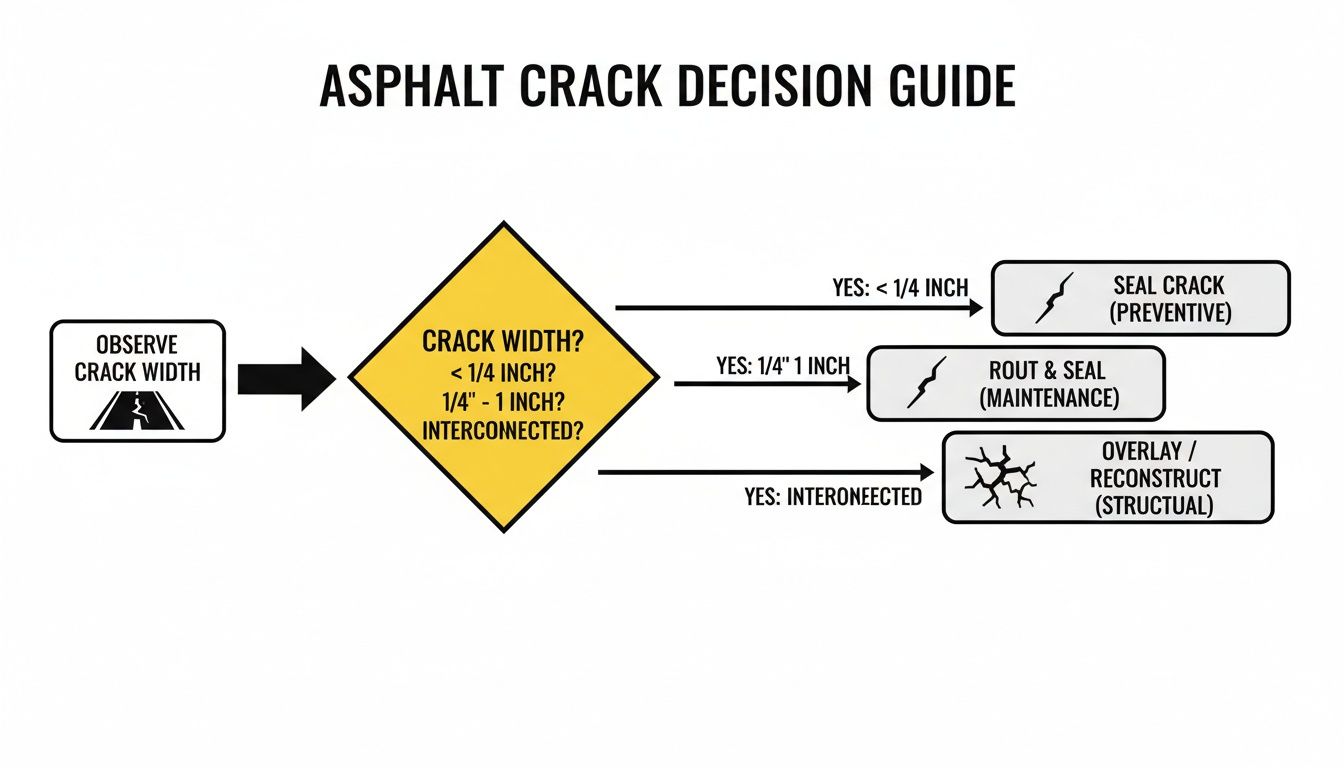
As you can see, while minor cracks are perfect candidates for filling, once they get wider or start connecting, you need to step up to a more robust solution.
When To Choose Asphalt Crack Sealing
For the more serious "working" cracks, crack sealing is the only real answer. These are the active cracks that visibly open and close as the Texas heat makes the pavement expand and cooler weather causes it to contract.
Sealing involves a highly flexible, rubberized, hot-applied material that bonds powerfully to the asphalt. Its elasticity is the magic ingredient—it stretches and compresses right along with the pavement, maintaining a watertight barrier year-round. It’s a more involved, premium repair, but it’s absolutely necessary for cracks that are in motion.
Ignoring these active cracks is a recipe for disaster. Water will inevitably get in, eroding the sub-base and accelerating pavement failure 3-5 times faster than on a sealed surface. Suddenly, that $1-2 per linear foot repair turns into a $10+ per square foot milling and repaving project.
Getting this choice right is fundamental to the health of your pavement. A proper crack sealing program can extend a parking lot's life by up to 50%, which can slash your future replacement budget by a massive 30-40%.
A professional assessment is always the surest way to diagnose your pavement's needs. If you want to explore this topic further, we have more resources on different parking lot repair strategies.
The Professional Asphalt Crack Filling Process
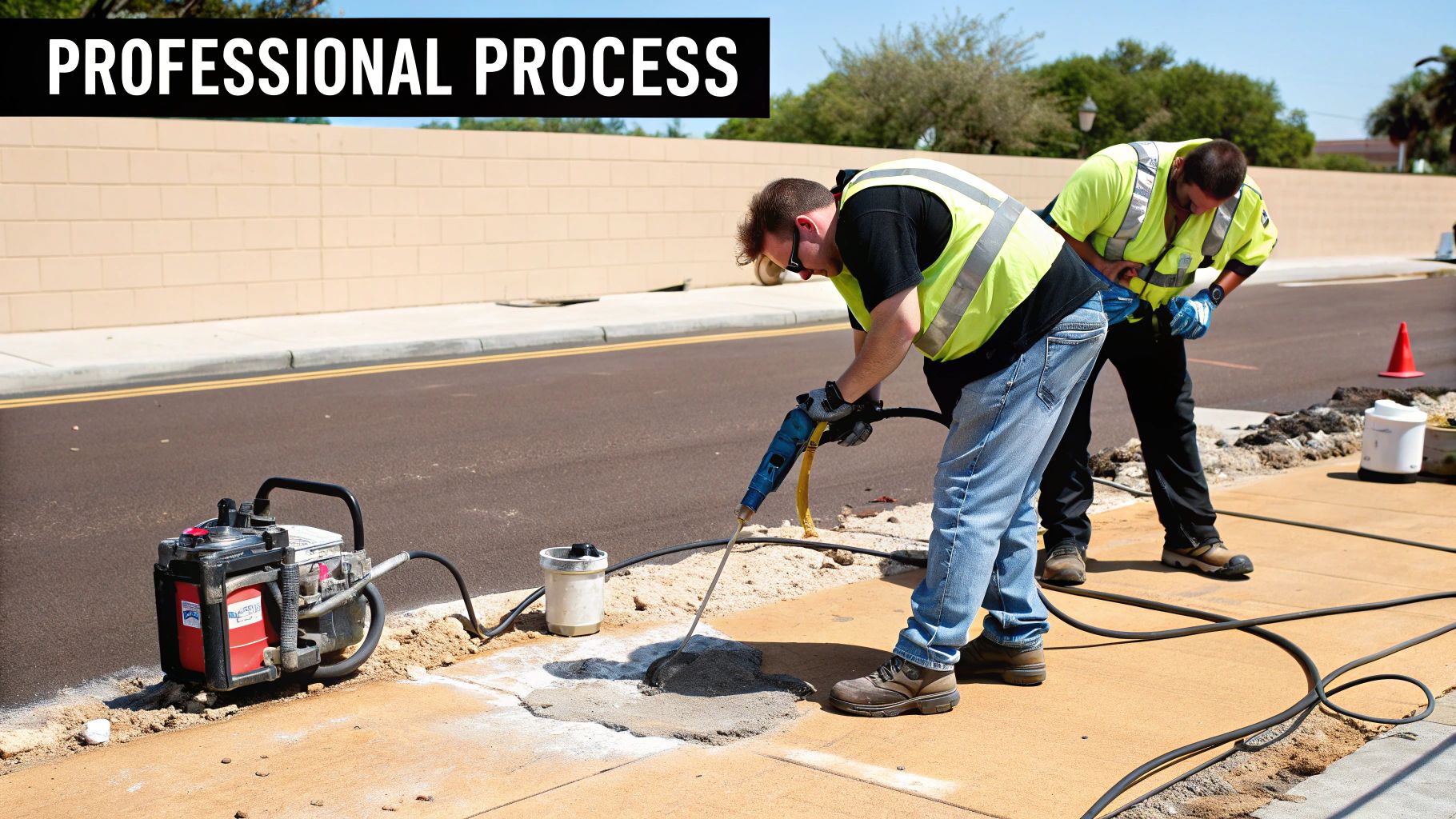
There’s a world of difference between a quick patch job and professional-grade crack filling. The real secret to a repair that lasts isn't just the material you use; it's the meticulous prep work that happens beforehand.
Simply pouring some filler into a dirty, damp crack is a recipe for failure. The material will never bond properly and you’ll be lucky if it makes it through a single season. A professional process, on the other hand, is designed to create a permanent, watertight seal that moves with the pavement and protects your investment for years. It’s the difference between a temporary fix and a lasting solution.
Step 1: Thorough Cleaning and Debris Removal
The first and most important step is getting the crack surgically clean. Think of it like this: you wouldn't glue two dusty surfaces together and expect a strong bond. It’s the same with asphalt. Any dirt, vegetation, or loose asphalt left inside will act as a bond-breaker, preventing the new filler from forming that critical watertight seal.
A pro crew uses a multi-stage approach to ensure nothing gets in the way.
- High-Powered Air: It all starts with a high-pressure air compressor. This blasts out loose debris, small rocks, and layers of dirt, clearing the bulk of the contaminants in seconds.
- Mechanical Brushing: For the really stubborn stuff—embedded dirt and stubborn weeds—a heavy-duty wire wheel is brought in. This tool scours the inner walls of the crack, getting rid of anything the compressed air left behind.
This intense cleaning creates a pristine channel, perfectly prepped for maximum adhesion.
Step 2: Routing for a Professional Finish
For many cracks, especially those that are narrow or have jagged, crumbling edges, a true professional will perform routing. This involves using a specialized machine to grind the crack into a clean, uniform channel, usually about ¾ of an inch wide and deep.
Now, making a crack bigger might sound counterintuitive, but there's a critical reason for it.
Routing creates a defined reservoir with a consistent shape and size. This allows the filler to be applied at the correct depth and volume, ensuring it has enough material to properly expand and contract without failing. It transforms a jagged, unpredictable fracture into a perfect receptacle for repair.
This one step dramatically improves the performance and lifespan of the asphalt crack filling, giving the material clean walls to bond to and a predictable volume to fill.
Step 3: The Critical Moisture Removal Stage
After all that cleaning and routing, there's one final enemy to defeat: moisture. Asphalt is porous, and even on a hot, sunny day, the inside of a crack can hold onto dampness. If you pour hot filler onto a damp surface, the moisture instantly turns to steam, creating bubbles and completely ruining the bond.
To prevent this, crews use a hot air lance. This powerful tool blasts superheated air—often over 2,000°F—directly into the crack. This intense heat does two crucial things at once:
- It instantly vaporizes any hidden moisture from deep within the asphalt's pores.
- It slightly softens the asphalt walls, helping the hot-pour filler fuse more effectively with the existing pavement.
Skipping this step is a common shortcut that almost always leads to premature failure. A bone-dry, pre-heated crack is the only way to guarantee a permanent, waterproof bond.
Step 4: Application of Hot-Pour Rubberized Filler
With the crack perfectly clean, routed, and dry, it's finally time to apply the filler. Professionals exclusively use high-quality, hot-applied, rubberized crack filler for a reason. This material is heated in a specialized kettle to a precise temperature, typically around 350-400°F, until it becomes a free-flowing liquid.
A skilled technician then carefully applies the molten filler using a pressurized wand or a V-shaped squeegee. They make sure the crack is filled just right—either flush with the surface or slightly overfilled to create a small, protective cap. As the material cools, it cures into a tough, flexible, and completely waterproof seal that locks water out for good.
Understanding The Economics Of Pavement Maintenance
Every property manager knows the drill: you have to justify every line item in your budget. It's easy to look at something like asphalt crack filling and see it as just another expense. But that's a mistake. The real financial picture is about a small, smart investment today preventing a massive, wallet-busting headache tomorrow.
Thinking of maintenance as just a cost is short-sighted. A better way to frame it is as an essential strategy for protecting one of your biggest assets—your parking lot. Ignoring those little cracks doesn't make them go away. It just puts the problem off, letting it grow into something far more expensive.
The Cost Of Action Versus The Price Of Neglect
Let's get down to the actual numbers. Professional asphalt crack filling is one of the most affordable maintenance tasks you can perform. You're typically looking at a cost between $0.50 and $1.50 per linear foot. For a standard commercial property, that might add up to a few hundred dollars—a very manageable operational expense.
Now, let's look at the alternative. When you ignore those cracks, water gets in. It seeps down into the sub-base, weakening the foundation of your entire lot. This is where the real trouble starts, leading to serious problems that demand serious money.
- Full-Depth Patching: Repairing a single pothole isn't cheap. It can easily cost $2,500 to $5,000, depending on how big it is and how much damage the water has done underneath.
- Milling and Repaving: If the damage spreads, you might have to grind off the top layer of asphalt and lay a new one. That's a project that quickly jumps into the tens of thousands.
- Complete Reconstruction: In the worst-case scenario, the entire pavement fails. This means a full tear-out and replacement—a major capital project that can run well into six figures.
The math doesn't lie. Spending a few hundred, or even a couple of thousand, dollars on routine crack filling is a drop in the bucket compared to the cost of reacting to major structural failure.
A Powerful Return On Investment
The financial case for being proactive is airtight. Study after study shows that tackling cracks early is the single most effective thing you can do to extend the life of your pavement.
The ROI is undeniable when you realize that water damage causes 85% of all asphalt failures. By investing in crack filling, you can reduce the need for a full resurfacing by 60-70%. You can explore more market insights on the impact of crack filling.
This isn't really about spending money at all; it's about smart asset management. A small, predictable maintenance budget directly shields you from huge, unexpected repair bills. It puts you back in control, allowing you to get the maximum lifespan out of your pavement through simple, preventative action.
Building A Complete Pavement Management Plan
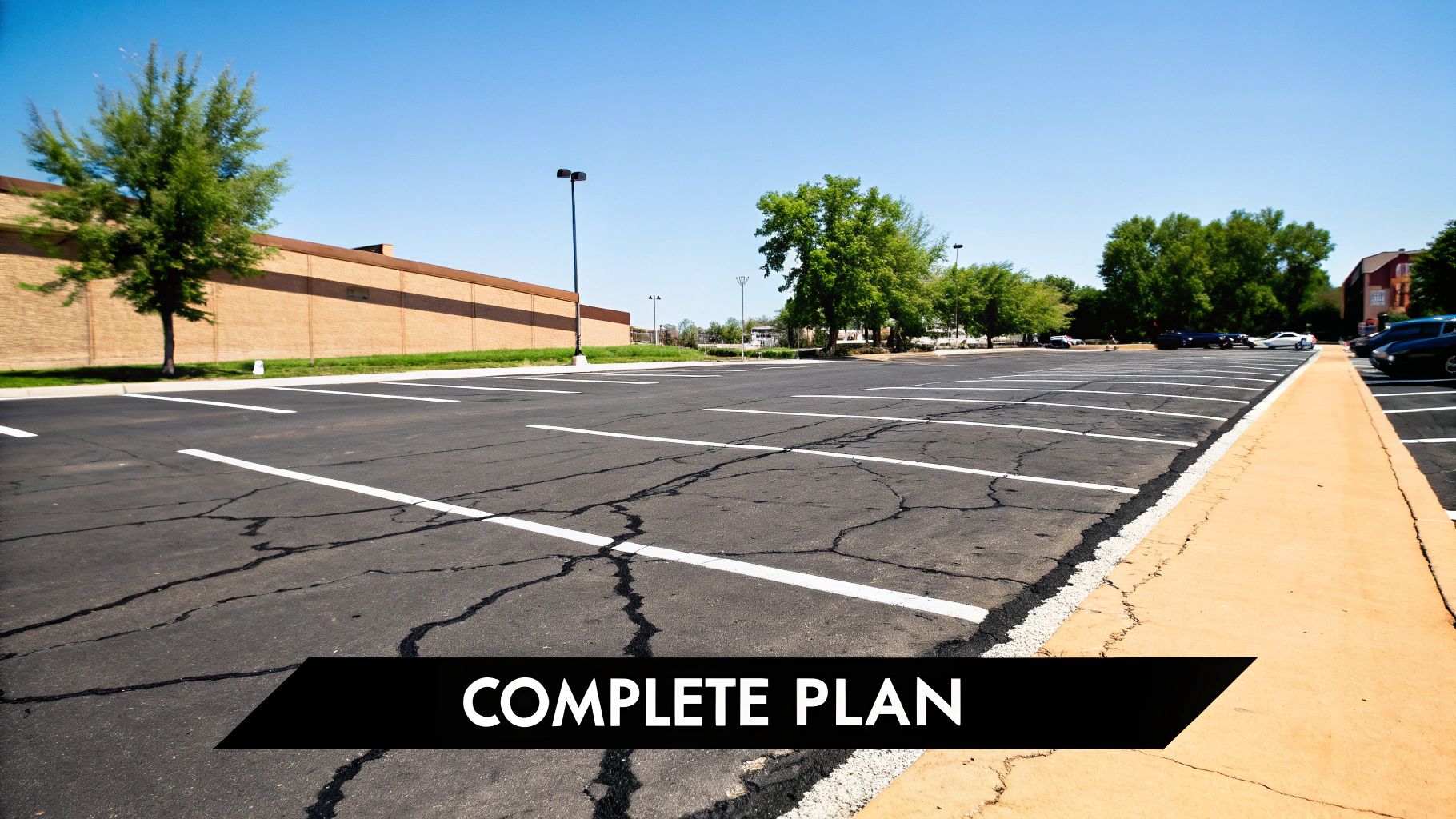
Smart property owners know that asphalt crack filling is a fantastic tool for protecting their investment. But the real secret to long-lasting pavement isn't just one-off repairs; it’s seeing crack filling as one piece of a much bigger puzzle. A true pavement management plan turns maintenance from a reactive headache into a proactive cycle of asset protection.
Let's put it this way: think of crack filling as first aid for your asphalt. When you treat a cut, you stop the bleeding and keep germs out. Crack filling does the same thing by sealing off the entry point for water—the number one enemy of pavement. It’s an essential first step, but it doesn't protect the rest of the surface from getting hurt.
Sealcoating: The Protective Shield
That’s where sealcoating comes into play. If filling cracks is the first-aid treatment, sealcoating is the tough, protective bandage you apply over the entire area. Once the cracks are properly filled and have cured, we apply a high-quality sealcoat over the whole parking lot.
This thin but mighty layer acts as a shield, offering several huge benefits:
- UV Ray Protection: It deflects the sun's harsh UV rays that bake the essential binding oils out of your asphalt, preventing it from becoming dry and brittle.
- Waterproofing: It creates a seamless, waterproof membrane, stopping rain and moisture from penetrating the pavement's naturally porous surface.
- Chemical Resistance: It guards against oil, gasoline, and other chemical spills that can eat away at the asphalt binder and cause soft spots.
When you pair these two services, you get a powerful defense system. Crack filling takes care of existing problems from the inside out, and sealcoating provides a blanket of protection from the outside in. This one-two punch is the core of any intelligent pavement maintenance strategy.
Restoring Safety And Curb Appeal With Restriping
The final piece of the puzzle is putting everything back in its place with fresh line striping. After a dark new sealcoat is applied, all your old pavement markings will disappear. Restriping isn't just a finishing touch for looks; it's a critical step that brings back order, safety, and compliance.
A professional striping job re-establishes clear traffic flow, designates parking stalls, and directs pedestrians safely through your lot. It’s the visual language of your property.
Most importantly, professional restriping ensures your property remains compliant with the Americans with Disabilities Act (ADA). Clearly marked handicap-accessible stalls, van-accessible areas, and pathways are not just a courtesy—they are a legal necessity.
This holistic approach completely changes the game. You're no longer just patching problems as they pop up; you’re actively managing the health, safety, and curb appeal of your investment. By scheduling these three services together—crack filling, sealcoating, and restriping—you create a cycle of care that keeps your property sound, safe, and looking sharp for years to come. To learn more about this approach, explore our comprehensive asphalt maintenance services.
Your Top Asphalt Repair Questions Answered
Even after you've got the basics down, you probably still have a few practical questions. That’s perfectly normal. Knowing the specifics helps you schedule maintenance, keep tenants in the loop, and make sure you're getting the most out of your investment. Here are some straightforward answers to the questions we hear most often.
When Is the Best Time of Year for Crack Filling?
The sweet spot for crack filling is during moderate, dry weather. Here in Houston, that usually points to the spring and fall. The pavement has to be bone-dry for the filler to stick properly, and extreme temperatures—hot or cold—can mess with how the material sets up.
As a rule of thumb, we won't touch a crack filling job if the temperature is below 40°F. The asphalt is too tight and brittle at that point. We also sidestep the blistering heat of a summer afternoon, which can create its own set of problems for the curing process.
How Long Until We Can Drive On It?
This is one of the best parts about using professional-grade, hot-pour rubberized filler: it cures incredibly fast. In most situations, traffic can roll over the repaired areas within just 20 to 30 minutes. We sometimes add a light dusting of sand or a special release agent to make sure nothing gets tacky.
That quick turnaround is a game-changer for commercial properties. It means less downtime for your business and fewer headaches for your tenants. We'll always give you a precise cure time based on the product we're using and the weather on that specific day.
How Long Will the Repair Last?
A few things really influence the lifespan of a crack filling job:
- The Prep Work: A crack that has been properly cleaned, routed, and dried is going to hold up much, much longer. No shortcuts.
- The Type of Crack: Filling is the perfect solution for stable, non-working cracks. Cracks that are constantly moving with temperature changes might need the extra flexibility of crack sealing.
- The Amount of Traffic: A busy entrance will obviously put more wear and tear on the repair than a rarely used corner of the lot.
When it's done right by a professional under the right conditions, a quality crack filling job should last you a solid 3 to 5 years. It’s one of the smartest, most cost-effective preventative maintenance tasks you can perform.
Can't I Just Fill the Cracks Myself?
You've probably seen the jugs of cold-pour filler at the hardware store. While they might seem tempting for a quick fix, they are a world away from a professional hot-pour application.
Those DIY products simply don't have the flexibility, staying power, or adhesive strength of the rubberized materials we use. More often than not, they fail within a year (sometimes a single season), and you're right back where you started, with water seeping into your pavement. For a repair that genuinely protects your asphalt and lasts for years, hiring a pro is the only way to go.
Ready to stop small cracks from becoming big, expensive problems? The team at Houston Parking Lot Striping has the right equipment and experience to get your asphalt sealed up tight. Contact us today for a free estimate and let's put a smart maintenance plan in place for your property.