

A Guide to Effective Parking Lot Repair and Maintenance
Think of your parking lot as the welcome mat for your business. It's the very first impression you make on a customer, client, or tenant. A smooth, well-marked surface says you’re professional and care about safety. A minefield of cracks and potholes? That just screams neglect.
Smart parking lot repair isn't just another line item on your maintenance budget; it’s a direct investment in your property's value, safety, and overall brand image.
Why Your Parking Lot Is a Critical Asset
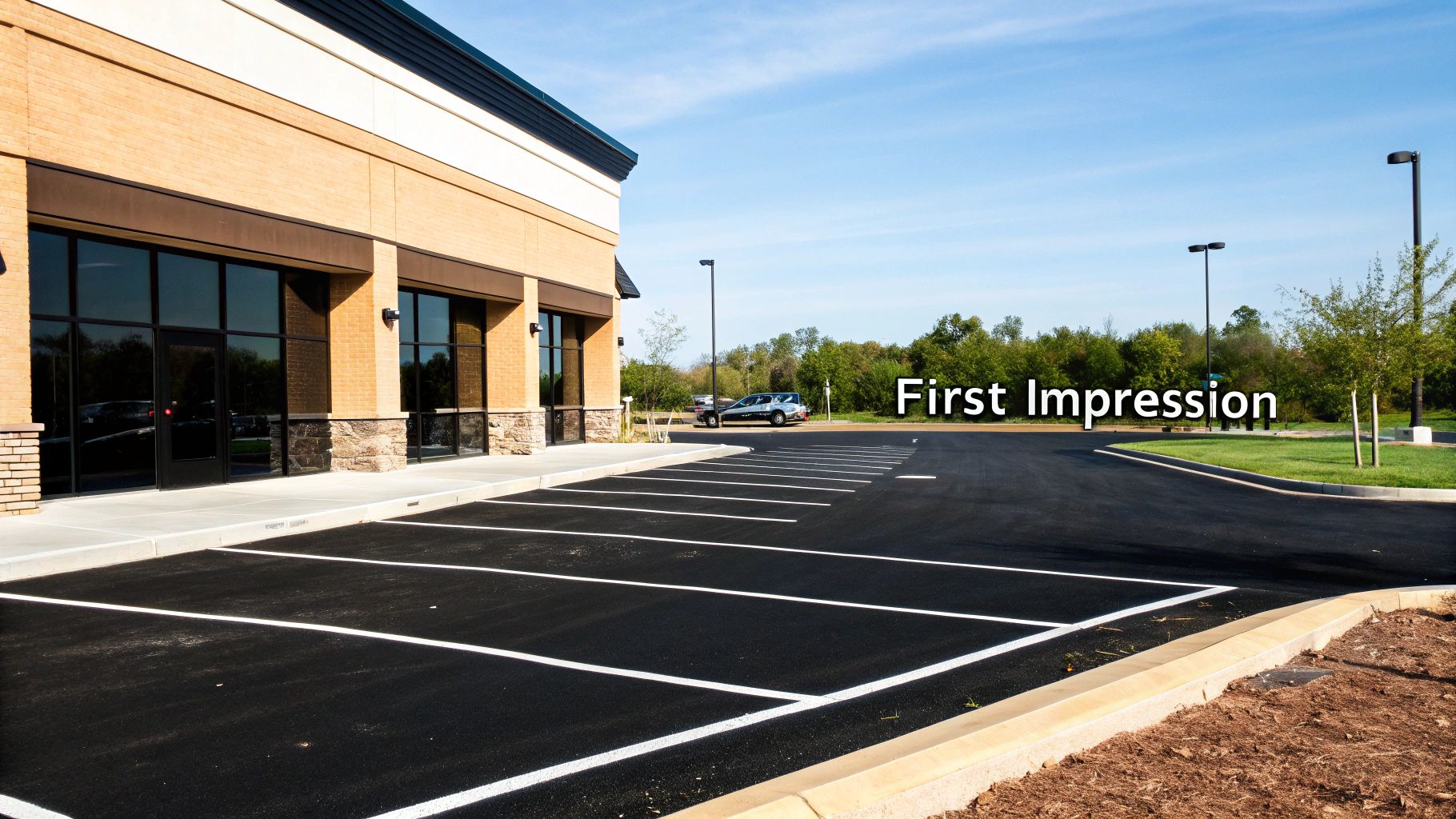
If you're a commercial property owner, general contractor, or facility manager, you know the state of your parking area sends a powerful message. It affects everything from how people perceive your business to your legal liability. Letting small issues slide is a recipe for disaster—a simple fix can quickly spiral into a budget-busting reconstruction project. The real key to managing this vital asset is staying ahead of the problems.
This guide is your roadmap to doing just that. We'll walk through how to spot trouble early, break down the different types of repairs, and help you make smart financial decisions that will protect your investment for years to come.
The Financial Impact of Neglect
Putting off repairs might feel like saving a few bucks now, but it almost always costs you more in the long run. Water is the enemy. It sneaks into tiny cracks, and when it freezes and expands, it forces those cracks wider, eventually creating crumbling potholes. A problem that could've been solved with a simple crack sealing job can escalate into a major patching or resurfacing project before you know it.
The numbers don't lie. The U.S. parking industry is booming and projected to hit $13.8 billion by 2025, which underscores just how important these spaces have become. More importantly, poorly maintained lots can increase your liability risks by 20-30% from accidents caused by things like faded lines or hazardous potholes. You can dig deeper into the parking industry's growth on IBISWorld.com.
A well-maintained parking lot isn’t just about looking good; it’s about smart risk management. Every crack you fill and pothole you patch is a step toward minimizing liability and protecting your bottom line.
More Than Just Pavement
A truly functional parking lot is more than just a place to leave a car. It's an essential part of your property’s infrastructure that handles several critical jobs.
- Safety and Accessibility: A smooth surface with clear markings and properly designated ADA-compliant spaces is non-negotiable for keeping visitors safe, especially those with disabilities.
- Curb Appeal: Let’s be honest, a pristine parking lot just looks better. It boosts your property's overall appearance and creates a positive, welcoming vibe before anyone even walks through the door.
- Traffic Flow: A well-designed layout isn't an accident. With clear directional arrows and defined spaces, you can prevent congestion and frustration, making the experience better for everyone.
- Property Value: Just like the roof or the HVAC system, a well-cared-for parking area is a tangible asset that directly contributes to the total value of your commercial property.
The bottom line is this: start thinking of your parking lot as an operational asset, not just a static slab of asphalt. That mental shift is the first step toward prioritizing the maintenance and repair work needed to keep it performing for the long haul.
Decoding the Damage: Signs Your Parking Lot Needs Attention
Think of your parking lot as telling a story. Every crack, puddle, and pit is a clue about its underlying health. Learning to read these signals is the first step in catching problems early, long before they turn into budget-breaking disasters. A quick walk-through can tell you almost everything you need to know.
Most pavement problems don't appear overnight. They start small, as tiny cracks or subtle shifts you might not even notice at first. But ignoring them is like letting a small roof leak go—what starts as a minor drip can eventually lead to massive structural damage. Understanding what you're looking at is the key to getting ahead of the curve.
Alligator Cracking: The Telltale Sign of Foundation Failure
If you see a pattern of interconnected cracks that looks like an alligator's skin, you've got a serious problem. This is called alligator cracking (or fatigue cracking), and it’s a clear sign that the issue isn't just on the surface. It’s a red flag waving from deep within your pavement’s foundation.
This kind of widespread cracking almost always points to a failure in the sub-base—the gravel and soil layer that supports the asphalt. Either the base has been compromised by water, or the asphalt layer was simply too thin to handle the traffic from the start. Water is the real enemy here; it seeps in, softens the foundation, and every car that drives over it puts more stress on the weakened structure, causing the cracks to spread.
If left unaddressed, roughly 75% of untreated asphalt cracks will evolve into potholes within just three years. Alligator cracking is the fast track to that outcome, signaling the clock is ticking on a much more expensive fix.
Potholes: The Obvious Safety Hazard
Potholes are the most notorious—and dangerous—form of pavement failure. These ugly depressions are far more than just an eyesore. They're a trip hazard for anyone walking across your lot and can easily cause damage to a customer's tires, suspension, or alignment. For any property owner, a pothole is a lawsuit waiting to happen.
They form when water gets into small cracks, freezes, and expands. This freeze-thaw cycle pushes the asphalt up, and when the ice melts, a void is left behind. The weight of traffic eventually causes the unsupported asphalt to collapse, and just like that, you have a pothole. It's a clear signal that smaller cracks were left untreated for too long.

Other Common Pavement Problems to Watch For
Beyond the big two, a few other issues can give you crucial insight into your lot's condition. Spotting these helps you and your contractor figure out the root cause and choose the right repair.
- Block Cracking: These are large, rectangular cracks, almost like a grid. You'll often see them in areas with low traffic. This isn't usually from heavy loads; it's a sign that the asphalt binder itself has aged, dried out, and become brittle from years of sun exposure.
- Raveling: Does your lot's surface look rough and grainy, with loose bits of gravel and sand everywhere? That's raveling. It happens when the smaller stones (the "aggregate") break loose from the asphalt binder, often due to poor compaction when it was first paved or simply from oxidation over time.
- "Bird Baths": After it rains, do you have shallow puddles that stick around for days? We call these "bird baths." While they might seem minor, they are a big deal. Standing water is asphalt's worst enemy—it slowly breaks down the surface and eventually seeps into the sub-base, setting the stage for much bigger problems.
Each of these signs tells you something different about what’s going on with your pavement. By learning to spot them, you can shift from making reactive, expensive repairs to following a proactive, manageable maintenance plan. This keeps your property safe, professional-looking, and holds its value for years to come.
Choosing The Right Parking Lot Repair Solution
Once you’ve spotted the warning signs across your parking lot, the next step is to match the problem with the right fix. Think of it like a doctor diagnosing an illness before writing a prescription; a small crack doesn't need a full repaving, just as a minor cold doesn't require major surgery.
Picking the correct parking lot repair method is crucial for both immediate safety and the long-term health of your asphalt. Every type of damage, from hairline cracks to gaping potholes, has a specific, proven remedy designed to stop the problem in its tracks and keep it from getting worse.
This decision tree infographic can help you visualize the process and point you toward the most logical repair for what you're seeing out there.
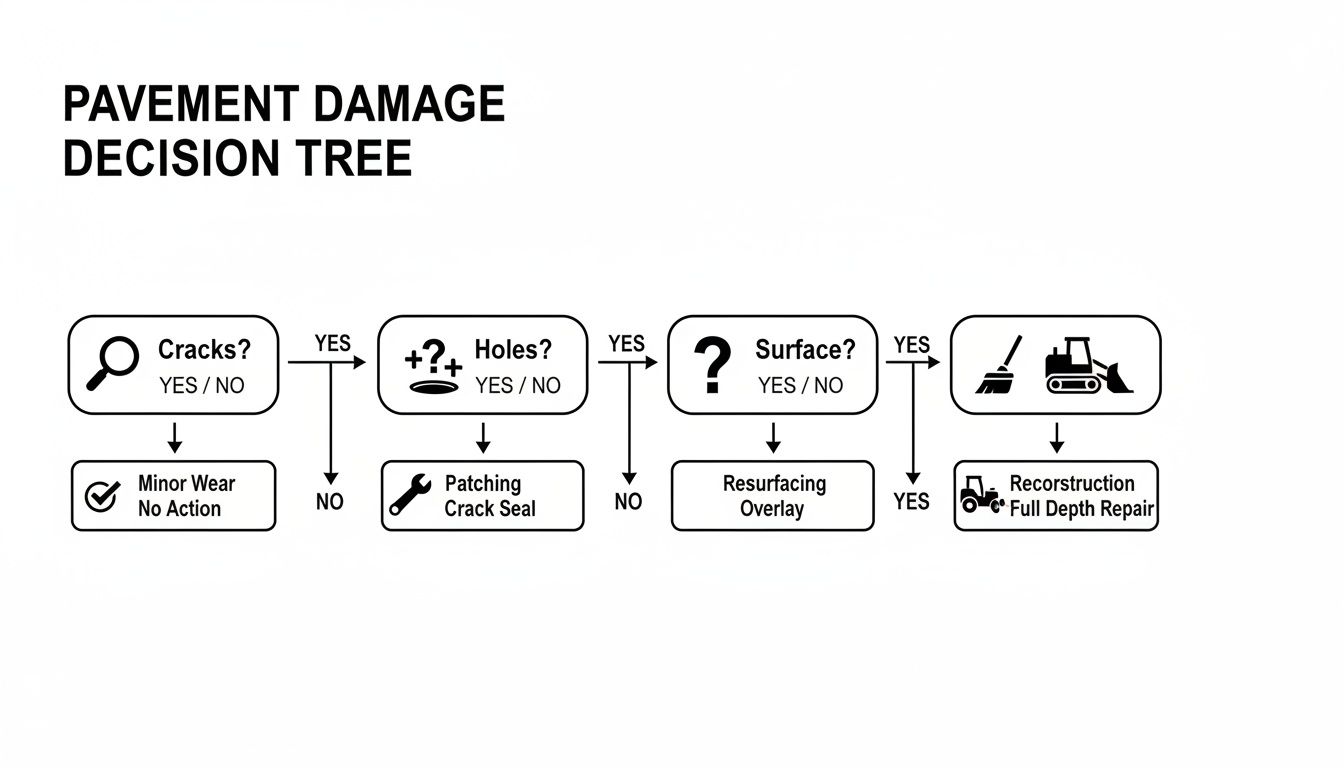
The flowchart breaks down the decision by starting with the symptom—be it a crack, a hole, or a faded surface—and guiding you to the most appropriate and cost-effective solution.
Crack Sealing To Stop Water Intrusion
Water is public enemy number one for asphalt. When it seeps into even the smallest cracks, it starts to eat away at the pavement's foundation, especially when freeze-thaw cycles kick in. Crack sealing is your first line of defense.
This process involves cleaning out the crack and injecting a hot, rubberized sealant. This material is flexible, so it expands and contracts with the temperature, creating a durable, waterproof barrier. It’s a simple but incredibly effective way to stop tiny issues from turning into massive, expensive headaches.
Pothole Patching For Immediate Safety
Potholes aren't just an eyesore; they're urgent safety hazards. They pose a real risk to pedestrians and can cause some serious damage to vehicles. Pothole patching is the go-to solution for these dangerous depressions.
The best way to do it involves cutting clean, uniform edges around the hole, applying a tack coat for adhesion, and then filling it with hot-mix asphalt. This material is then compacted down to create a dense, durable patch that blends right in with the surrounding pavement, giving you a safe and smooth surface again.
Comparing Common Parking Lot Repair Methods
To make the decision a bit easier, here’s a quick look at how the different repair methods stack up. This table breaks down what each solution is best for, its relative cost, and the kind of lifespan extension you can expect.
| Repair Method | Best For | Relative Cost | Lifespan Extension |
|---|---|---|---|
| Crack Sealing | Isolated linear cracks up to 1-inch wide. | Low | 1-3 years |
| Pothole Patching | Holes and deep depressions in the pavement. | Low to Medium | 2-5 years |
| Sealcoating | Faded surfaces and fine hairline cracks (preventative). | Medium | 3-5 years |
| Resurfacing | Widespread alligator cracking or surface damage over 25-30% of the lot. | High | 8-15 years |
As you can see, the right choice really depends on the severity and scale of the problem. A preventative approach with sealing and sealcoating can save you from needing more costly repairs down the road.
Sealcoating For Long-Term Pavement Protection
If crack sealing is like a targeted treatment, think of sealcoating as a protective shield for your entire parking lot. It’s a thin, liquid layer applied over the whole asphalt surface that defends it from its biggest enemies.
A proactive sealcoating plan can be one of the smartest investments a property manager makes. It's a classic case of an ounce of prevention being worth a pound of cure, directly impacting long-term repair budgets and property appeal.
Sealcoating creates a barrier against:
- UV Rays: The sun's rays oxidize the asphalt binder, making it brittle and prone to cracking.
- Water Penetration: It seals the tiny surface pores, preventing water from getting a foothold.
- Fuel and Oil Spills: These chemicals can soften and dissolve the asphalt binder, but a sealcoat resists this damage.
As the global parking services market is projected to grow from $128.2 billion in 2025 to a staggering $236.2 billion by 2035, property managers can expect more traffic and more wear. In this environment, sealcoating is a vital maintenance tool, proven to prevent up to 70% of surface cracks and extend asphalt life from 10 to 20 years. This simple step can slash future repaving costs by as much as 60%—a huge saving for any property.
Asphalt Resurfacing An Economical Overhaul
When the damage is widespread—we're talking more than 25-30% of your lot covered in alligator cracking, countless potholes, or severe surface decay—patching just won't cut it anymore. This is where asphalt resurfacing, also known as an overlay, comes in.
Resurfacing involves milling off the top layer of damaged asphalt and laying down a brand-new one. It restores the look and structural integrity of your lot without the massive expense of a complete tear-out and reconstruction. It’s a way to give your pavement a new lease on life for a fraction of the cost. The material itself is also a key decision; you can learn more by checking out our guide on asphalt versus concrete solutions.
Addressing Drainage Issues
Finally, remember that sometimes the problem isn't the pavement itself but the water management around it. If you have constant puddles or "bird baths" after it rains, you likely have a drainage problem.
Fixing this could mean regrading the slope of the lot, cleaning out catch basins, or installing new drainage to channel water away from your pavement. If you don't address the root cause, any repair you make is just a temporary band-aid.
Budgeting for Repairs to Maximize Your Investment
Figuring out a budget for parking lot repair can feel like trying to hit a moving target. Costs are all over the map, and it’s tempting to just focus on the lowest upfront price. But the best strategy isn't about finding the cheapest patch—it's about getting the most long-term value out of every single dollar you invest.
The first step in building a smart budget is understanding what actually drives those costs. A few key factors will always shape the final estimate a contractor gives you. Once you get a handle on these, you can make informed decisions that protect both your pavement and your bottom line.
Key Factors That Influence Repair Costs
No two repair jobs are the same, and the final bill will swing based on a handful of core variables.
- Size of the Repair Area: This one's pretty straightforward. A single, isolated pothole is obviously going to cost less to fix than a massive field of alligator cracking that takes out several parking spaces.
- Severity of Damage: The depth of the problem really matters. A thin surface crack is a simple sealing job, but a deep pothole that’s wrecked the sub-base requires a much more involved process of excavation and rebuilding.
- Material Choices: The quality of the materials, like hot-mix asphalt for a patch or a high-end sealant for cracks, directly affects the price. Cheaper materials might look good on the initial invoice, but they often fail quickly, forcing you to pay for the same repair all over again.
This really brings up the classic trade-off between upfront cost and long-term value. A quick, cheap patch might be appealing, but if it falls apart in a year, you’ve just paid to fix the same problem twice. Investing in a solid, durable repair from the get-go is almost always the more cost-effective move in the long run. To get a better sense of the numbers, you can explore our detailed asphalt price calculator.
The Strategic Advantage of Bundling Services
One of the smartest ways to stretch your repair budget is by bundling services together. Think about it: once a contractor has their crew and equipment on your property, adding another related task is far more efficient and affordable than calling them out for a separate trip later.
Combining services isn't just about saving money; it's about minimizing disruption. A single, well-planned project reduces downtime for your business and delivers a completely refreshed, professional look all at once.
For instance, scheduling your line striping and signage updates right after a fresh sealcoat is a fantastic move. That new blacktop is the perfect canvas for crisp, bright lines, and the crew can knock it all out in one coordinated project. This simplifies logistics, cuts down on mobilization fees, and leaves your parking lot looking polished and professional in one fell swoop.
The parking management market is booming, expected to jump from $7.22 billion in 2025 to $12.41 billion by 2030. This rapid growth underscores just how critical these assets are. With off-street lots seeing 20-30% higher traffic lately, the pressure to perform timely, efficient repairs is higher than ever. It's no wonder property managers are leaning into strategic maintenance to control costs and keep their properties looking sharp. You can explore more about these market trends on MarketsandMarkets.com.
Ensuring Safety and Compliance During Repairs
A great parking lot repair job is about more than just fresh asphalt. It’s about creating a space that’s safe, accessible, and legally sound for every single person who uses it. Cutting corners on safety or compliance isn't just risky—it's a surefire way to end up with hefty fines, potential lawsuits, and a reputation you don't want.
Any seasoned contractor knows that these rules aren't just suggestions. From ADA accessibility to emergency vehicle access, these legal mandates are set in stone to protect visitors and first responders. Overlooking them can completely undermine an otherwise flawless repair.
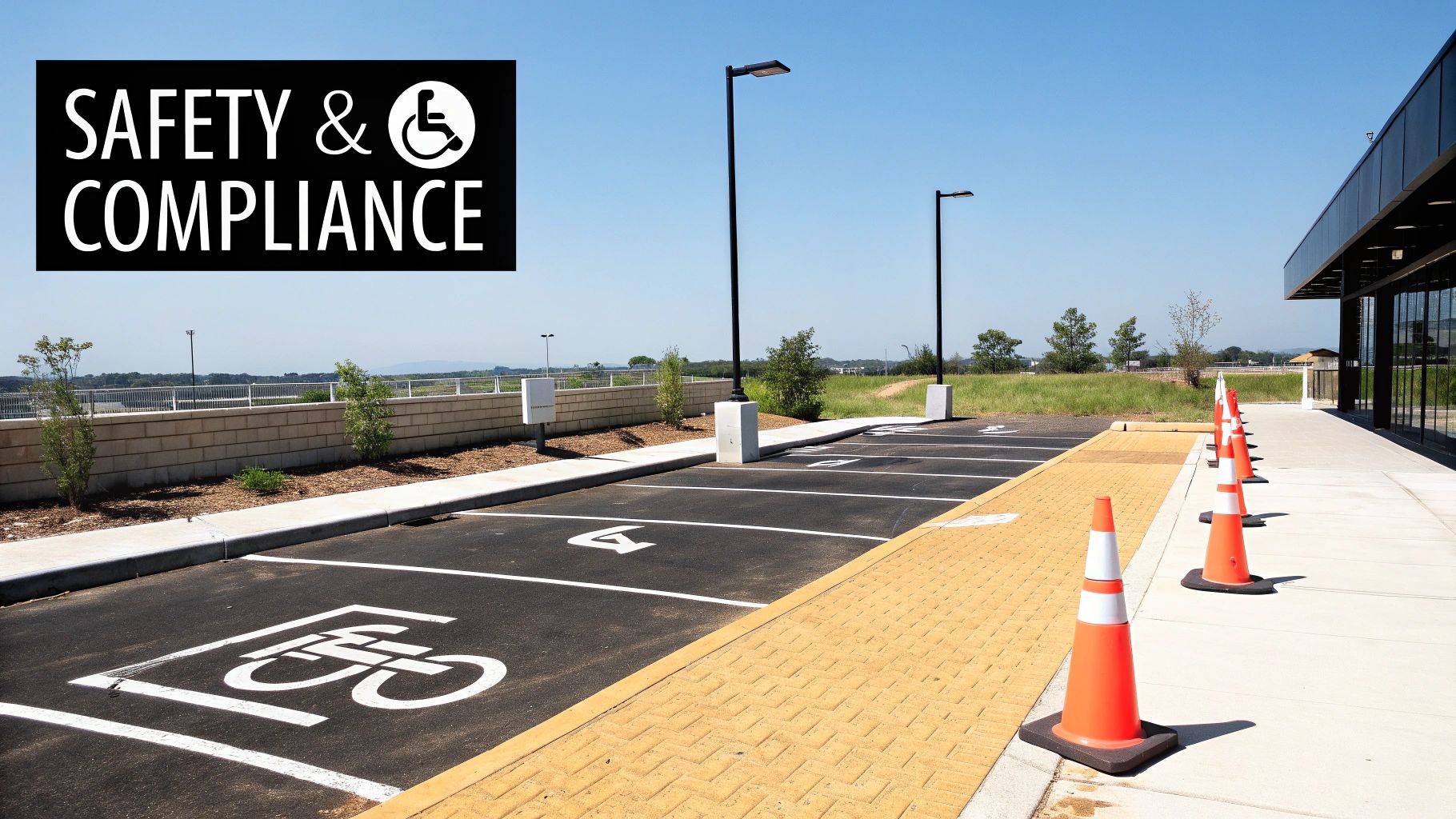
Navigating ADA Requirements
The Americans with Disabilities Act (ADA) lays out very specific rules for accessible parking. The goal is simple: ensure everyone, regardless of disability, has safe and equal access. Getting this wrong isn't an option, as the penalties can be severe.
A contractor who knows their stuff will nail every detail, including:
- The Right Number of Spaces: Your lot's total size determines how many accessible spots you're required to have.
- Proper Dimensions: A standard accessible space needs to be at least 96 inches wide, with an adjacent access aisle of at least 60 inches.
- Van-Accessible Spaces: For every six accessible spots, at least one must be van-accessible, which means the access aisle needs to be 96 inches wide.
- Correct Signage: Every accessible spot needs the International Symbol of Accessibility mounted at a specific, regulated height.
ADA non-compliance is no joke. Fines can start at $75,000 for a first offense and jump to $150,000 for repeat violations. Making sure your repair plan is fully compliant isn't just smart—it's essential.
Keeping Fire Lanes Clear and Compliant
Fire lanes are the lifelines of your property in an emergency. They give fire trucks and other emergency vehicles the access they need, and local fire codes are incredibly strict about their location, width, and markings. A blocked or improperly marked fire lane can cost precious seconds when it matters most.
These regulations often demand specific paint—usually red or yellow—and clear "NO PARKING – FIRE LANE" stencils placed at regular intervals. A professional crew will know the local codes inside and out. If you want a deeper dive, you can learn more about fire lane signage in our comprehensive guide.
Implementing a Robust Safety Plan
From the moment work begins, the safety of your customers, employees, and the crew itself has to be the number one priority. A good contractor won't move a single cone without a solid plan for managing traffic and keeping pedestrians safe. This is far more than just scattering a few orange cones around.
A proper safety plan always involves:
- Phased Work Zones: Breaking the project into smaller, manageable sections ensures the rest of the lot can stay open and functional.
- Clear Signage: Simple, effective directional signs are crucial for guiding drivers and pedestrians safely around the construction area.
- Physical Barriers: Cones, barricades, and caution tape create a clear, visible boundary between the work zone and active areas.
- Crew Safety Protocols: All workers on site must wear high-visibility gear and follow strict safety procedures to prevent accidents.
When you make these safety and compliance measures a priority, your parking lot repair project does more than just fix pavement. It demonstrates a real commitment to protecting everyone on your property.
How to Choose the Right Parking Lot Repair Contractor
The success of your entire parking lot repair project really comes down to the team you hire. A great contractor delivers solid, high-quality work that stands the test of time. The wrong one can leave you with a mess that starts falling apart in months, forcing you to spend even more money to fix their mistakes.
Choosing the right partner is hands-down the most critical decision you'll make. It’s not just about who can lay down asphalt—you need a team that gets the bigger picture. They should be pros at project management, respect your business operations, and communicate clearly from start to finish.
Credentials and Experience Matter
When you start looking at contractors, begin with the basics. Any reputable company will be upfront and ready to show you proof of their qualifications and a history of successful jobs right in your area.
Don’t be shy about asking for these essentials:
- Proof of Insurance: This is non-negotiable. Always confirm they have both general liability and workers' compensation insurance. It’s your shield against any liability if an accident happens on your property.
- Proper Licensing: Make sure they are fully licensed to work in your city and state. This proves they meet local professional standards and are operating legitimately.
- A Strong Project Portfolio: Ask to see their work. A contractor who is proud of what they do will be happy to share photos or even addresses of past projects, so you can go see the quality for yourself.
Think of it this way: hiring a contractor is like finding a long-term partner for your property's health. Their local experience is priceless, as they’ll know all about the regional soil conditions, weather patterns, and city codes that can make or break a project.
Key Questions to Ask Potential Partners
Once you’ve checked their credentials, it's time to dig a little deeper into how they actually work. The answers you get here will tell you everything you need to know about their professionalism, work quality, and project management style.
A good contractor will give you detailed, confident answers. If you get vague responses or they seem hesitant to talk specifics, that’s a major red flag.
Questions About Their Process
- What specific materials do you use for this type of repair? A true expert can explain why they use hot-mix asphalt for a pothole versus a cold patch, or why a certain rubberized sealant is best for your climate.
- How do you plan to manage traffic and pedestrian safety? They should have a clear plan for phasing the work, using signs, and setting up barriers to keep everyone safe and minimize disruption to your business.
- What’s your process for preparing the surface before the repair? Proper prep work is everything. A lasting fix depends on them cleaning out cracks thoroughly or cutting clean, stable edges around a pothole before filling it.
- Who will be my main point of contact, and how will we communicate? A smooth project requires a clear communication channel. Knowing who to call and how you'll get updates is essential.
- What’s the timeline, and how do you handle unexpected delays? A professional crew will give you a realistic schedule and already have a plan for dealing with things like a sudden rainstorm.
Ultimately, you’re looking for a contractor who respects your time and your business. A team that keeps a clean, organized job site and communicates openly will make the whole repair process feel seamless. The end result? A parking lot that protects your investment for years to come.
Answering Your Top Questions About Parking Lot Repair
Even with the best information, it's natural to have questions when you're planning a major maintenance project like parking lot repair. As specialists in this field, we hear a lot of the same concerns from property managers. Getting straight answers is the first step toward making a smart investment that protects your property for years to come.
Let's walk through some of the most common questions we get.
How Often Should a Commercial Parking Lot Be Sealcoated?
In most climates, especially where the sun is strong and traffic is consistent, we recommend sealcoating every 2 to 3 years. Think of this as the single most important piece of preventative maintenance you can do for your asphalt.
Sealcoat acts like a shield. It blocks out the UV rays that dry out the asphalt, prevents water from seeping into the foundation, and protects against oil and gas spills that can eat away at the surface. Staying on a regular sealcoating schedule is the best way to fend off bigger, more expensive problems down the road.
Here's a powerful way to look at it: Proactive sealcoating is more than just a cosmetic fix. It's a critical maintenance strategy that can prevent an estimated 70% of surface cracks and nearly double the functional life of your pavement.
What's the Difference Between Crack Sealing and Crack Filling?
It's easy to mix these two up, but they're designed for very different situations.
Crack filling is a more basic fix. It involves pouring a cold material into stable, non-moving cracks. The main goal is simply to keep water out. It's a decent temporary solution for minor, hairline cracks that aren't shifting.
Crack sealing is the heavy-duty, long-term solution. We use a hot, rubberized sealant that's poured into active cracks—the kind that widen and shrink as the temperature changes. This material stays flexible, moving with the pavement to create a truly waterproof, durable bond. For most cracks caused by weather and seasonal shifts, sealing is the far superior choice.
Can We Stay Open While You're Repairing Our Lot?
Yes, absolutely. Any professional parking lot repair contractor worth their salt knows that shutting down your business is not an option. We work with you to create a smart, phased plan that keeps disruption to an absolute minimum.
Here’s how that typically works:
- Strategic Sectioning: We'll break your parking lot into different zones and tackle them one at a time.
- Clear Traffic Control: Your customers and employees will be guided safely around the work area with cones, barriers, and easy-to-understand signage.
- Smart Scheduling: We can often plan the work for your slower periods, like evenings or weekends, to make the process even smoother.
The key is communication. We'll coordinate closely with you to ensure your operations continue with as little interruption as possible.
When Is It Time to Resurface Instead of Just Patching?
Patching is great for a few isolated potholes, but there comes a point where it's like putting a band-aid on a much bigger problem. If you're looking at widespread damage across more than 25-30% of your parking lot, it’s time to think about resurfacing.
An asphalt overlay, or resurfacing, is the best route when you see large networks of "alligator" cracks, dozens of potholes, or significant areas where the surface is crumbling away. Instead of spot-treating, we install a brand new layer of asphalt over the entire surface. This completely restores your lot's appearance and structural integrity for a fraction of what a full replacement would cost.
A safe, clean parking lot is a non-negotiable part of your business's first impression. For a professional assessment and expert repair services that keep your property safe and inviting, trust the team at Houston Parking Lot Striping. Get your free estimate and schedule your parking lot repair today!