
Warehouse Organization Tips: Quick Wins to Boost Safety and Efficiency
An organized warehouse is more than just a tidy space; it's the backbone of operational efficiency, safety, and profitability. In a competitive industrial landscape, every misstep, delay, or accident chips away at your bottom line. Facility and operations managers are constantly challenged to optimize flow, ensure compliance, and maximize every square foot of their available space. This guide cuts through the noise, providing 10 essential, actionable warehouse organization tips grounded in proven methodologies like 5S and lean management.
Moving beyond generic advice, we will dive into the critical role of strategic floor striping and marking. This visual language directs traffic, protects personnel, and ensures your facility operates like a well-oiled machine. Prepare to implement changes that will not only streamline your operations but also create a safer, more productive environment for your entire team. Each tip includes specific details and illustrative photos to help you transform your space.
This comprehensive list offers a blueprint for warehouse managers, commercial property owners, and contractors aiming to boost performance. From color-coded zone marking to fire lane compliance and pedestrian safety pathways, these warehouse organization tips are designed for immediate, practical application. You will learn how to standardize aisle widths, mark hazardous material zones, and clearly designate inventory staging areas to reduce errors and improve throughput. The total word count is over 500 words to provide a detailed, comprehensive resource for your needs.
1. Color-Coded Zone Marking and Floor Striping
One of the most effective warehouse organization tips for boosting operational efficiency and safety is implementing a systematic, color-coded floor marking system. This visual management tool uses distinct colors, typically aligned with OSHA and ANSI standards, to delineate specific functional zones on the warehouse floor. By painting clear boundaries, you create an intuitive environment that guides employee movement, organizes inventory flow, and enhances overall safety compliance.
This method transforms a vast, open space into a structured and easily navigable facility. For example, major logistics providers like Amazon and DHL use this strategy to define picking paths, pallet storage locations, and automated vehicle routes. Similarly, manufacturing facilities utilize bold red lines for fire lanes and yellow markings to designate caution zones around heavy machinery.
Actionable Implementation Steps
- Prioritize High-Traffic Zones: Begin implementation in the busiest areas, such as loading docks and main aisles, to maximize immediate impact and minimize operational disruption.
- Consult Safety Standards: Align your color scheme with established safety guidelines. A common practice is using yellow for traffic lanes, red for fire safety and emergency exits, and blue for raw materials.
- Choose Durable Materials: For high-traffic areas subjected to forklifts and heavy carts, opt for durable applications like thermoplastic or epoxy coatings. For expert guidance on material selection, you can explore professional warehouse floor painting services to ensure longevity.
- Train Your Team: A color-coded system is only effective if everyone understands it. Incorporate training on the color meanings into your standard safety orientation and post visual guides in common areas.
2. Fire Lane and Emergency Access Compliance Striping
One of the most critical warehouse organization tips is establishing and maintaining clearly marked fire lanes and emergency access routes. This goes beyond simple organization and enters the realm of non-negotiable safety and legal compliance. By using high-visibility striping, signage, and physical barriers, you ensure first responders have unobstructed access to your facility during a fire, medical crisis, or other emergency, which is a requirement enforced by agencies like the Houston Fire Department.
This safety protocol is a mandatory component of facility management in any large-scale operation. For instance, major industrial warehouses in the Port of Houston and sprawling shopping centers across the city implement comprehensive fire lane systems to meet stringent inspection standards. These visible markings guide not only emergency vehicles but also daily traffic, preventing accidental blockages and ensuring the area remains clear at all times.
Actionable Implementation Steps
- Consult Local Authorities: Before striping, contact your local fire marshal, such as the Houston Fire Department, to review your layout plan. This proactive step ensures your design meets all current codes and avoids costly rework.
- Use Regulation-Compliant Materials: Opt for durable, regulation-specific materials. Thermoplastic red paint is the standard for fire lanes due to its longevity and high visibility, outperforming standard traffic paint under heavy use.
- Enhance Visibility: Install reflective signage at fire lane entrances and boundaries. For detailed guidance on proper placement and requirements, you can learn more about effective fire lane signage to ensure 24/7 compliance.
- Train and Document: Integrate fire lane policies into employee safety training, emphasizing that these zones must remain clear. Maintain all planning documents and inspection records for easy access during compliance audits.
- Schedule Regular Maintenance: Adhere to NFPA standards by scheduling annual inspections and re-striping to counteract fading and wear. This keeps your markings clear and your facility compliant.
3. Aisle Width Standardization and Traffic Flow Striping
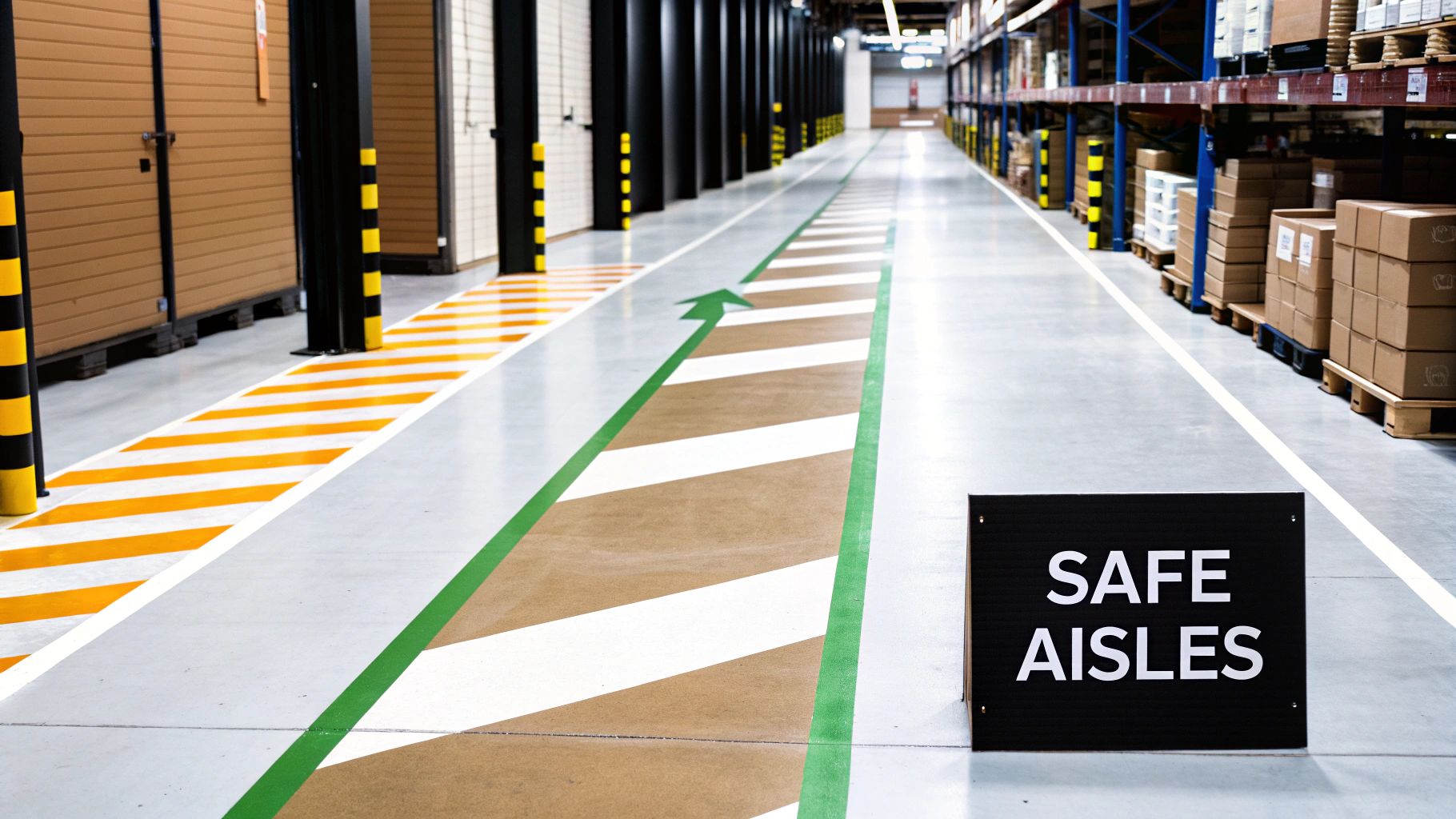
Among the most critical warehouse organization tips is the standardization of aisle widths combined with clear traffic flow striping. This practice involves designing and marking all traffic corridors to a uniform width that safely accommodates the largest equipment operating within the facility. By defining these pathways with crisp white or yellow lines, you establish a predictable and orderly environment that significantly boosts operational efficiency, reduces congestion, and minimizes the risk of costly collisions.
This systematic approach ensures that forklifts, order pickers, and pallet jacks can navigate freely without creating bottlenecks or causing damage to inventory and racking. For example, high-volume automotive parts distribution centers often implement 12-foot aisles to handle frequent, two-way forklift traffic. Similarly, many e-commerce fulfillment centers improve picking speed and safety by designating one-way aisles marked with clear directional arrows to manage the flow of personnel and carts.
Actionable Implementation Steps
- Measure Your Largest Equipment: Before striping, determine the minimum required width by measuring your largest vehicle, accounting for its turning radius and load overhang. A common rule is to add at least three feet to the width of the largest vehicle for safe clearance.
- Mock-Up and Test Layouts: Use temporary floor marking tape to lay out proposed aisle configurations. Run your equipment through these mock-ups to test for maneuverability and identify potential choke points before committing to permanent paint.
- Maintain Striping Visibility: For maximum visibility from elevated forklift seats, use a standard 6-inch line width for all aisle markings. Mark intersections with bright yellow cross-hatching to alert operators to potential cross-traffic.
- Implement Directional Cues: In one-way systems, install highly visible directional arrows on the floor at regular intervals, typically every 30-50 feet, to reinforce traffic patterns and prevent confusion.
4. ADA Compliance Striping and Accessible Routes
Integrating ADA-compliant striping is a critical component of warehouse organization tips that extends beyond mere efficiency into legal compliance and inclusivity. This process involves installing precise markings that clearly delineate accessible parking spaces, loading zones, and barrier-free routes to and within the facility. By adhering to federal accessibility standards, you ensure that employees and visitors with disabilities can navigate the warehouse environment safely and independently, reinforcing a commitment to workplace equality.
This level of organization is not just a best practice; it is a legal requirement mandated by the Americans with Disabilities Act (ADA). For example, distribution centers must mark designated accessible parking with specific dimensions and symbols per the 2010 ADA Standards for Accessible Design. Similarly, large-scale manufacturing facilities are required to maintain clear, accessible routes from parking areas to main entrances and essential workspaces, ensuring unimpeded passage for everyone.
Actionable Implementation Steps
- Consult Federal Guidelines: Before beginning any striping project, thoroughly review the official 2010 ADA Standards for Accessible Design to ensure your plans for dimensions, slope, and signage are fully compliant.
- Audit Existing Markings: Use a professional ADA compliance checklist to audit your current facility. Identify and document any non-compliant areas, from faded parking lines to obstructed interior pathways.
- Ensure Proper Route Width: Verify that all designated accessible routes maintain a minimum clear width of 48 inches to allow for comfortable wheelchair passage, free from temporary or permanent obstructions. For comprehensive guidance on integrating these routes into your overall layout, you can review expert advice on parking lot layout design.
- Mark Hazards Clearly: Use high-contrast striping and tactile warning surfaces to clearly identify potential hazards, such as abrupt level changes or unprotected drop-offs along accessible paths.
- Train Your Team: Educate all facility staff, especially maintenance and logistics teams, on the importance of keeping accessible routes clear at all times. This training reinforces that these pathways are not for temporary storage or staging.
5. Hazardous Material Storage Zone Marking
Properly managing hazardous materials is a critical component of any comprehensive warehouse organization plan, directly impacting safety and regulatory compliance. Hazardous material storage zone marking involves using specialized, highly visible floor striping and signage to clearly delineate areas where chemicals, flammable liquids, or other dangerous goods are stored. This visual system is essential for preventing accidental exposure, guiding emergency response efforts, and ensuring adherence to strict EPA, OSHA, and NFPA standards.
This safety-critical practice transforms high-risk areas into controlled, easily identifiable zones. For example, chemical distribution centers in industrial hubs like Houston use distinct, chemically-resistant markings to segregate acids from bases, preventing dangerous reactions. Similarly, manufacturing facilities designate flammable liquid storage areas with specific striping to comply with NFPA 30, minimizing fire risks and ensuring appropriate safety protocols are followed. This organizational tip is non-negotiable for facilities handling regulated substances.
Actionable Implementation Steps
- Consult Regulatory Standards: Begin by coordinating with your facility’s safety officer to align your marking plan with current OSHA, EPA, and local fire code requirements. Ensure all designations for flammable, corrosive, or toxic materials are compliant.
- Use Chemically Resistant Materials: Standard paint is often insufficient for hazmat zones. Opt for durable, chemically-resistant applications like specialized epoxy or thermoplastic striping that can withstand potential spills and harsh cleaning agents.
- Integrate Signage: Supplement floor markings with clear, universally understood signage at eye level. This should include hazard identification symbols (pictograms), material safety data sheet (MSDS) locations, and required personal protective equipment (PPE).
- Conduct Regular Audits: Hazmat storage needs can change. Perform quarterly safety audits to confirm that all markings remain visible, intact, and accurately reflect the current inventory and storage layout. Update markings immediately when new materials are introduced or locations change.
6. Inventory Staging Area and Dock Zone Striping
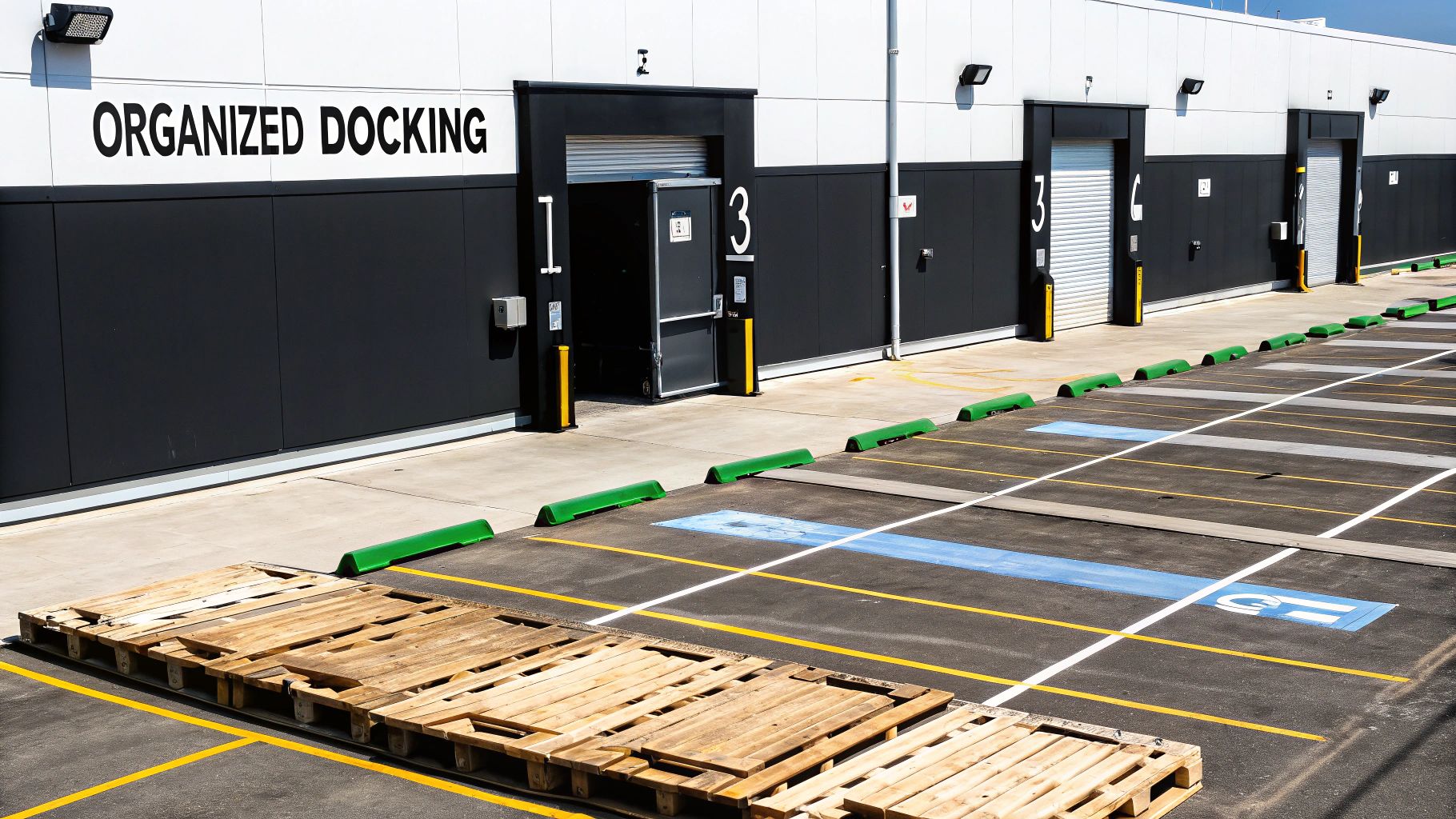
One of the most critical warehouse organization tips for streamlining supply chain velocity is the implementation of precise striping for loading docks, receiving areas, and inventory staging zones. This system uses clear, painted lines to designate specific areas for incoming and outgoing materials, organizing the chaotic flow of goods. By marking dock doors, staging lanes, and vehicle positioning zones, you create a highly efficient environment that minimizes congestion, accelerates truck turnaround times, and improves inventory control from the moment it arrives to the second it departs.
This strategy is fundamental for high-volume operations where speed and accuracy are paramount. For example, e-commerce fulfillment centers use this method to manage dozens of dock doors, assigning each one a corresponding staging area to prevent order mix-ups. Likewise, major 3PL providers like XPO Logistics and DHL Supply Chain rely on numbered dock stalls and color-coded staging areas to coordinate carrier schedules and sort freight for different destinations, drastically reducing handling errors and dwell time.
Actionable Implementation Steps
- Collaborate with Key Personnel: Involve your shipping and receiving managers in the layout design process. Their firsthand knowledge is invaluable for creating a functional system that addresses real-world operational bottlenecks.
- Use Durable, High-Visibility Materials: Loading docks are high-traffic, high-abuse environments. Use industrial-grade yellow epoxy or thermoplastic striping for maximum durability and visibility against constant forklift and pallet jack traffic.
- Enhance Driver Clarity: Install large, clear signage and directional arrows visible from a driver's perspective. Mark vehicle positioning stalls with bold numbers to guide drivers to the correct bay quickly and safely.
- Prioritize Nighttime Operations: For facilities operating 24/7, incorporate reflective striping and well-lit signage. This simple addition significantly enhances safety and efficiency during night shifts or in low-light conditions.
7. Equipment Storage and Maintenance Zone Designation
A critical component of effective warehouse organization tips involves dedicating specific, clearly marked zones for equipment storage and maintenance. This practice uses floor striping and prominent signage to create designated "parking" for forklifts, pallet jacks, ladders, and other essential tools. By establishing these zones, you prevent valuable equipment from obstructing aisles, emergency exits, or operational pathways, significantly enhancing both safety and workflow.
This systematic approach to equipment management is a cornerstone of lean warehouse operations and OSHA compliance. For instance, large distribution centers often designate specific charging stations for electric forklifts with striped stalls to ensure each vehicle is returned to its proper place after a shift. Similarly, manufacturing facilities create controlled tool crib areas to manage access to hand tools, reducing loss and ensuring equipment is available when needed. These designated areas streamline end-of-shift procedures and simplify maintenance scheduling.
Actionable Implementation Steps
- Conduct an Equipment Audit: Start by cataloging all mobile equipment to determine the exact space required for storage and charging infrastructure. This ensures you allocate sufficient square footage without wasting valuable floor space.
- Use Individual Markings: Stripe individual parking stalls for each piece of major equipment, like forklifts or scissor lifts. This improves accountability and makes it easy to spot missing machinery at a glance.
- Position Zones Strategically: Locate equipment storage areas near points of use, charging outlets, and maintenance stations to minimize travel time and operational downtime.
- Implement Check-In/Check-Out Procedures: For shared equipment, establish a formal sign-out and sign-in process. This, combined with designated storage, reduces loss and encourages operator responsibility.
- Post Maintenance Schedules: Display maintenance and inspection schedules directly within the storage zone to keep preventative tasks top-of-mind and ensure compliance.
8. Pedestrian Pathway and Crosswalk Separation Striping
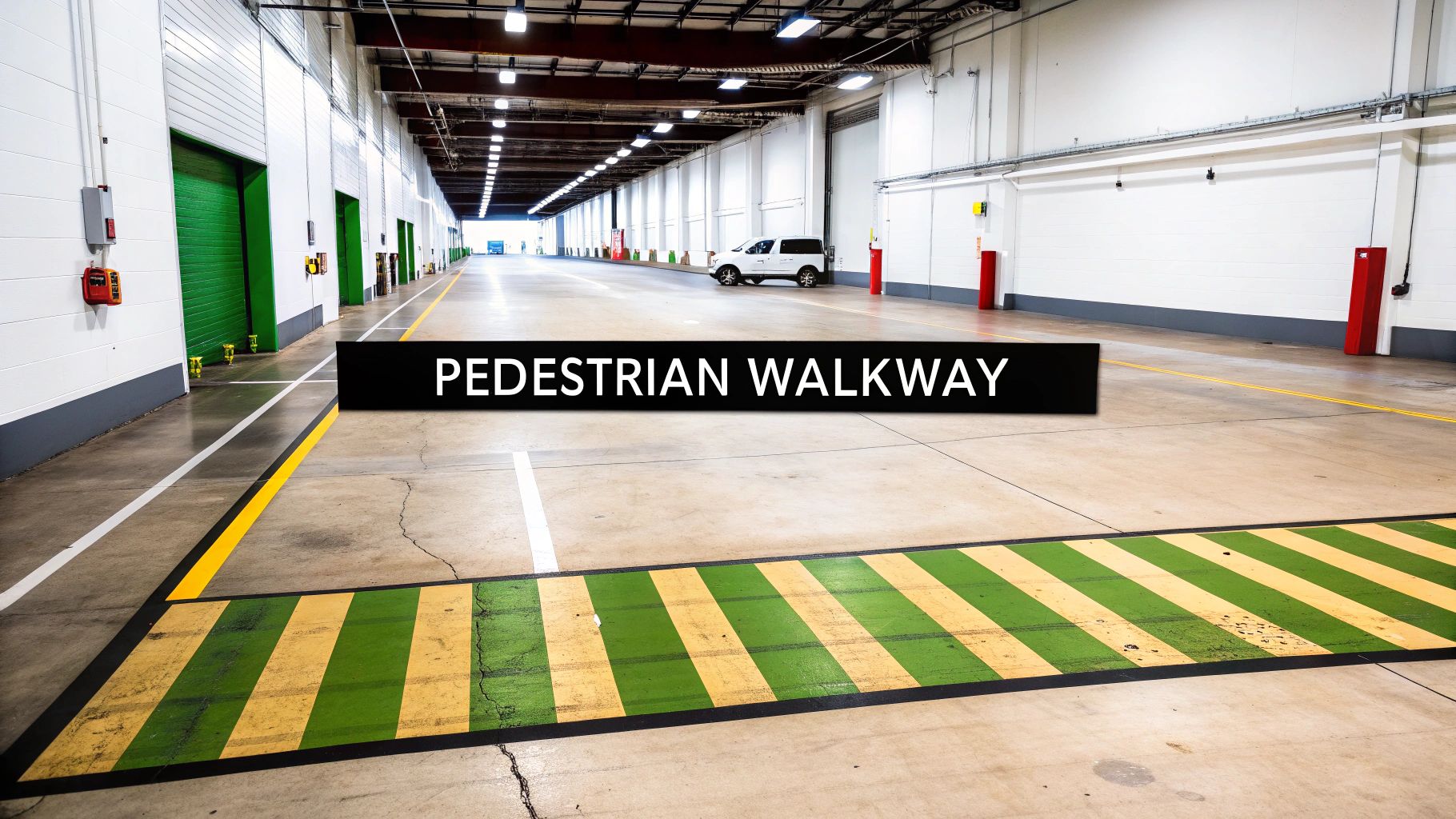
Among the most critical warehouse organization tips for mitigating risk is the clear demarcation of pedestrian walkways separate from vehicle traffic. This safety protocol involves using striping, cross-hatching, and other visual cues to create designated paths for employees on foot. By establishing these protected lanes, you drastically reduce the potential for collisions between personnel and heavy equipment like forklifts, which are a leading cause of serious workplace injuries according to OSHA.
This system is not just about lines on a floor; it's about engineering a safer flow of movement for everyone. Major distribution hubs, like those operated by Amazon, feature wide, clearly marked pedestrian pathways to protect thousands of employees. Similarly, automotive parts warehouses often use bright yellow crosswalks at intersections where foot and vehicle traffic converge, while cold storage facilities may even mark heated walkways to enhance both safety and employee comfort.
Actionable Implementation Steps
- Analyze Traffic Patterns: Before painting, conduct a thorough analysis of foot and vehicle traffic to identify high-risk zones and natural desire lines. This ensures your pathways are placed for maximum safety and efficiency.
- Use Standardized Colors: Employ a consistent color scheme. Typically, white striping is used for main pedestrian walkways, while yellow is reserved for caution areas and crosswalks where pathways intersect with vehicle lanes.
- Mark Intersections Clearly: Apply bold, yellow-and-black cross-hatching at all points where pedestrian and vehicle paths cross. This high-visibility pattern alerts both drivers and walkers to exercise extreme caution.
- Train and Reinforce: Your striping is only effective if followed. Integrate training on pathway protocols into new employee orientation and conduct regular safety refreshers. Post signs to remind staff to stay within designated zones.
9. Inventory Rotation Marking and Product Location Striping
A key element of effective warehouse organization tips involves integrating product location striping and inventory rotation markings directly onto the floor. This system uses color-coded lines, numbers, and symbols to designate specific storage locations, bins, and product categories within racking systems. It serves as a physical extension of your Warehouse Management System (WMS), providing clear visual cues that simplify inventory management and support critical rotation strategies like FIFO (First-In, First-Out) and LIFO (Last-In, First-Out).
This strategy is vital for industries with perishable or time-sensitive goods. For instance, food distribution centers often mark FIFO zones with expiration date indicators to prevent spoilage, while pharmaceutical warehouses use distinct color-coded striping to identify temperature-sensitive product zones. By creating a visually intuitive map on the floor, you reduce picking errors, improve stock accuracy, and ensure products are shipped in the correct order, protecting both revenue and product integrity.
Actionable Implementation Steps
- Coordinate with Your WMS: Before applying any paint, ensure your proposed location marking scheme aligns perfectly with your digital inventory management system. The physical markings must match the digital locations to prevent system-wide discrepancies.
- Use Durable, High-Contrast Markings: Choose durable materials like thermoplastic for location numbers to withstand vibrations from racking systems and machinery. Use high-contrast colors to ensure markings are easily readable from a distance and by barcode scanners.
- Standardize Application: Apply all location numbers and codes at a consistent height and orientation on the floor or racking. This standardization simplifies visual scanning and reduces the time it takes for employees to locate items.
- Train Staff Thoroughly: Your team must be trained on the location identification system and its connection to inventory rotation protocols. Integrate this training into standard operational procedures and onboarding to ensure consistent compliance.
10. Safety Equipment Access and Emergency Station Striping
Beyond organizing inventory and traffic, one of the most critical warehouse organization tips is using strategic striping to ensure immediate access to safety equipment. This practice involves installing highly visible floor markings to clearly delineate the locations of fire extinguishers, first aid kits, emergency exits, and eye wash stations. In an emergency, clear visual cues are essential for guiding employees to life-saving resources, minimizing response time, and complying with strict OSHA regulations.
This method transforms safety from a checklist item into an integrated part of the warehouse environment. For example, many industrial plants stripe emergency shut-off valve locations with bold warning colors, while manufacturing facilities mark emergency shower stations with high-visibility green and white hatching. These markings ensure that crucial safety zones remain free from obstruction and are instantly recognizable, even in high-stress situations. This systematic approach is vital for maintaining a safe and compliant workspace.
Actionable Implementation Steps
- Consult Safety Standards: Align your striping with ANSI and OSHA guidelines. Use bright green for general safety equipment like first aid stations and eye washes, and bold red for fire safety equipment.
- Ensure High Visibility: Install directional arrows and complementary signage that are visible from multiple vantage points throughout the warehouse, guiding personnel quickly to the nearest station.
- Keep Zones Clear: Striped areas around safety equipment must be designated as "no-storage" zones. This prevents pallets, carts, or other materials from blocking access when it is needed most.
- Conduct Regular Audits: Perform quarterly checks to confirm that all safety markings are still bright, intact, and unobstructed. Re-paint faded lines and reinforce training to maintain awareness and compliance.
- Integrate into Training: Incorporate the locations and meanings of all emergency station markings into employee safety orientations and regular training drills to ensure universal understanding and preparedness.
10-Point Warehouse Zone & Striping Comparison
| Item | Implementation Complexity 🔄 | Resource Requirements ⚡ | Expected Outcomes ⭐📊 | Ideal Use Cases 💡 | Key Advantages ⭐ |
|---|---|---|---|---|---|
| Color-Coded Zone Marking and Floor Striping | 🔄 Moderate — needs layout planning and temporary disruption | ⚡ Low–Medium — thermoplastic/epoxy, labor, periodic maintenance | ⭐⭐ High — improves navigation, reduces accidents 20–30% | Warehouses, fulfillment centers, high-traffic workzones | Clear zone delineation, OSHA/ADA alignment, cost-effective |
| Fire Lane and Emergency Access Compliance Striping | 🔄 Low–Moderate — code coordination and inspections required | ⚡ Medium — durable red striping, signage, wheel stops, authority approvals | ⭐ High — ensures life-safety access, avoids fines and liability | Facilities with vehicle access; commercial/industrial sites | Guarantees emergency access, reduces citations, protects insurance |
| Aisle Width Standardization and Traffic Flow Striping | 🔄 High — measurement, workflow analysis, possible layout changes | ⚡ Medium — durable striping, directional markers, planning time | ⭐⭐ High — increases throughput, reduces collisions 25–40% | High-throughput distribution centers, forklift-intensive operations | Optimizes movement, lowers damage, improves inventory accuracy |
| ADA Compliance Striping and Accessible Routes | 🔄 Moderate — requires ADAAG expertise and possible facility mods | ⚡ Medium — blue/white markings, tactile strips, signage, audits | ⭐ High — legal compliance, lowers ADA liability and penalties | Public-facing warehouses, facilities with employees/visitors with disabilities | Ensures legal access, promotes inclusivity, improves morale |
| Hazardous Material Storage Zone Marking | 🔄 High — needs hazmat classification and safety coordination | ⚡ Medium–High — GHS signage, chemical-resistant striping, containment markings | ⭐ High — prevents exposure, aids emergency response, ensures regulatory compliance | Chemical storage, flammable/solvent warehouses, industrial plants | Improves hazmat safety, regulatory adherence, reduces remediation risk |
| Inventory Staging Area and Dock Zone Striping | 🔄 Moderate — requires coordination with shipping/receiving | ⚡ Low–Medium — numbered stalls, reflective paint, directional arrows | ⭐⭐ Medium–High — reduces turnaround time 15–25%, improves staging accuracy | Fulfillment centers, 3PL docks, busy receiving/shipping hubs | Faster dock operations, less congestion, clearer driver guidance |
| Equipment Storage and Maintenance Zone Designation | 🔄 Low–Moderate — equipment audit and placement planning | ⚡ Low — painted stalls, signage, charging area markings | ⭐ Medium — cuts equipment damage/theft 20–30%, improves maintenance flow | Facilities with many mobile assets, maintenance workshops | Reduces damage/theft, improves accountability and appearance |
| Pedestrian Pathway and Crosswalk Separation Striping | 🔄 Moderate — traffic analysis and possible physical barriers | ⚡ Medium — wide striping, cross-hatching, reflective elements, curbs/speed bumps | ⭐⭐ High — reduces pedestrian-vehicle collisions 40–60% | Mixed traffic warehouses, high footfall areas, retail distribution | Significant safety gains, OSHA compliance, lower claims |
| Inventory Rotation Marking and Product Location Striping | 🔄 High — requires WMS integration and detailed planning | ⚡ Medium–High — color/numbered markings, barcode labels, system updates | ⭐ Medium–High — reduces waste 10–20%, improves picking accuracy and speed | Food, pharma, temperature-sensitive or high-SKU warehouses | Improves rotation, reduces expiration/obsolescence, WMS integration |
| Safety Equipment Access and Emergency Station Striping | 🔄 Low–Moderate — coordinate with emergency plans and audits | ⚡ Low — bright green/yellow striping, arrows, signage, regular checks | ⭐ High — faster access to life-saving equipment, better evacuation readiness | Any operational facility, areas with hazardous processes | Ensures quick equipment access, emergency preparedness, compliance |
Your Next Step: From Planning to Professional Implementation
Throughout this guide, we've explored ten high-impact warehouse organization tips, moving beyond generic advice to provide actionable strategies you can implement. We’ve covered everything from color-coded floor striping that defines specific zones to the critical, non-negotiable requirements of fire lane, emergency access, and ADA compliance striping. The common thread connecting these powerful strategies is the fundamental role of clear, logical, and durable floor markings in creating a high-performance environment.
A well-organized warehouse is not just about tidiness; it’s a dynamic system where every element has a purpose. By standardizing aisle widths for optimal traffic flow, clearly marking hazardous material zones, and designating specific areas for inventory staging and equipment storage, you eliminate ambiguity and reduce operational friction. These visual cues empower your team to work more efficiently, minimize errors, and navigate the facility with confidence and safety.
From Blueprint to Reality: Executing Your Plan
The true value of these warehouse organization tips is unlocked during execution. A detailed plan is your blueprint, but the professional application of floor striping and markings is what brings that blueprint to life, ensuring it withstands the daily rigors of a busy industrial setting. This is where intention meets implementation.
Key takeaways to guide your next steps include:
- Safety is Non-Negotiable: Prioritize compliance-driven markings first. Fire lanes, pedestrian pathways, and emergency equipment access zones are essential for protecting your team and assets.
- Efficiency is Engineered: Strategic striping for traffic flow, inventory rotation, and staging areas directly translates to reduced travel times, faster order fulfillment, and fewer bottlenecks.
- Clarity Prevents Chaos: A visually intuitive system, built on color-coding and clear signage, reduces the cognitive load on employees, leading to fewer mistakes and a more streamlined operation.
The Power of Professional Partnership
While a motivated internal team can handle basic organizational tasks, the precision, durability, and regulatory knowledge required for comprehensive floor marking often demand specialized expertise. For complex layouts, strict compliance with OSHA, NFPA, and ADA standards is paramount. An experienced striping contractor understands the nuances of surface preparation, the correct paint or epoxy for your specific floor type and traffic volume, and the exact dimensional requirements for compliant markings.
Key Insight: Investing in professional striping is not an expense; it is a foundational investment in operational excellence. It solidifies your safety protocols, streamlines your workflow, and creates a physical framework that supports long-term growth and efficiency.
Ultimately, mastering warehouse organization is an ongoing commitment to continuous improvement. By implementing these structured, visual strategies, you are building a more resilient, productive, and safer operation from the ground up. Start by conducting a thorough audit of your current layout, identify your most critical pain points, and create a prioritized action plan. This proactive approach will transform your facility from a space of logistical challenges into a model of strategic efficiency.
Ready to translate your organizational plans into a safe, compliant, and efficient reality? The experts at Houston Parking Lot Striping specialize in industrial and warehouse floor markings, ensuring your facility meets all safety codes with durable, high-quality application. Contact Houston Parking Lot Striping today to discuss your project and build a foundation for operational excellence.