
Your Guide to Parking Lot Line Striping in Houston
When you think about your commercial property, what's the very first thing a customer or tenant experiences? It's your parking lot. Far from being just a place to leave a car, your parking lot is the first handshake, the initial welcome. Parking lot line striping is the language it uses to communicate—it's the blueprint that creates a safe, organized, and professional first impression.
This isn't just about splashing some paint on the pavement. It’s a carefully designed system that guides vehicles, makes the most of your available space, and keeps you on the right side of the law. This guide will walk you through everything you need to know about professional parking lot striping, from understanding the crucial role it plays in safety and compliance to choosing the right materials and hiring a trustworthy contractor.
The Blueprint for a Safe and Efficient Parking Lot
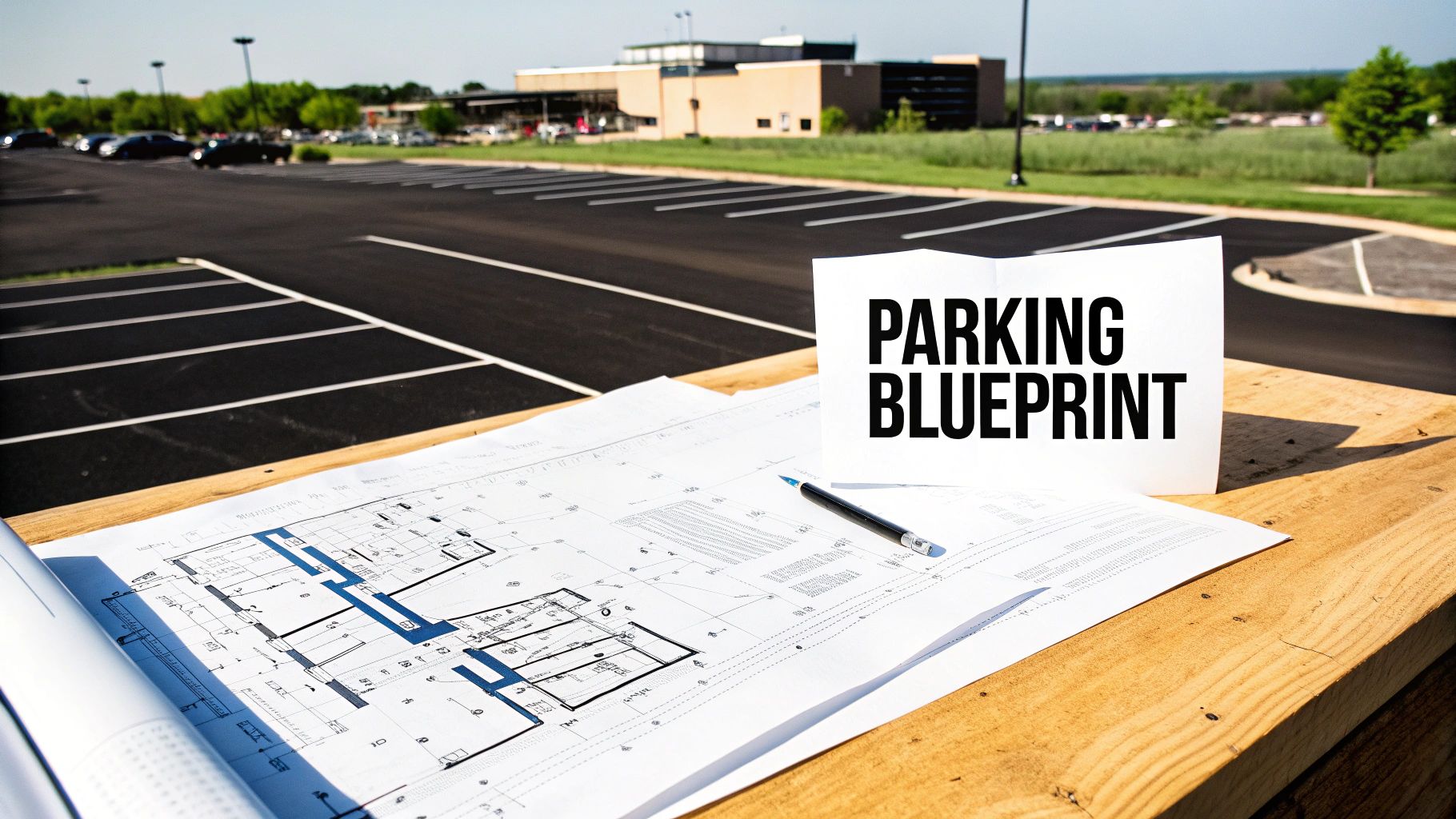
Imagine trying to build a new office building without an architect's blueprint. You'd end up with a confusing, inefficient, and downright dangerous structure. Your parking lot is no different. Professional parking lot line striping is that architectural plan for your asphalt, turning a blank slate into a functional, intuitive, and safe environment.
Without that clear direction, chaos is inevitable. Drivers get confused, parking becomes a free-for-all, and the odds of an accident skyrocket. Just as a building's blueprint ensures it won't collapse, your lot's striping layout provides the operational integrity it needs to function smoothly day in and day out.
More Than Just Paint on Asphalt
It’s easy to look at a freshly painted line and see just that—a line. But in reality, every marking is doing a critical job. From the stop bar that prevents a collision to the crosswalk that protects a pedestrian, each element is a silent director, telling every person on your property exactly where to go and how to behave.
This thoughtful layout has a real, tangible impact on both the customer experience and your bottom line. A well-organized lot doesn't just look better; it actively prevents the fender-benders and pedestrian mishaps that can lead to a world of headaches, from insurance claims to legal battles. For any Houston property manager, clear striping is your first and best line of defense against risk.
The Core Functions of Professional Striping
A professional striping job isn't a single-task service; it's a multi-tool that solves several problems at once, delivering value that goes far beyond aesthetics. Here's what it really accomplishes:
- Optimizing Traffic Flow: Think of directional arrows and stop bars as the traffic signals for your property. They create a predictable flow, cutting down on congestion and preventing drivers from making risky, unpredictable moves.
- Maximizing Parking Capacity: A smart layout is all about efficiency. It ensures you’re using every last square foot to its full potential, fitting in the maximum number of vehicles without making the space feel cramped or dangerous.
- Ensuring Safety and Compliance: Clearly marked fire lanes, pedestrian crosswalks, and ADA-compliant handicap stalls aren't optional. They are non-negotiable legal requirements that keep you compliant while protecting visitors and giving emergency services the access they need.
- Enhancing Curb Appeal: A lot with crisp, bright lines looks clean, professional, and well-maintained. It sends a powerful message that you care about your property and, by extension, the people who use it.
A thoughtfully designed parking lot is an asset that enhances property value and minimizes liability. It communicates competence and attention to detail before a visitor even steps out of their car.
The growing demand for quality striping services tells the whole story. The global market for the equipment alone was valued at $1.2 billion and is projected to nearly double by 2033. This isn't just about looks; it's a direct response to the need for safety. Federal data shows that poorly maintained, faded markings are a contributing factor in over 25% of nighttime crashes in parking areas. You can learn more about the factors driving the line striping industry's growth and why a professional job is so crucial.
That’s why savvy Houston property owners and general contractors see line striping for what it truly is: not just a maintenance chore, but a foundational investment in a successful commercial property.
Navigating Houston ADA and Fire Lane Regulations
Proper parking lot line striping goes way beyond just making a lot look neat and tidy. It’s about following a strict set of rules that keep people safe and ensure your property is legally compliant. In Houston, getting ADA and fire code requirements wrong isn't a small slip-up—it can lead to some hefty fines, potential lawsuits, and a reputation for not prioritizing your visitors' safety.
Think of these regulations as the non-negotiable rulebook for your property. Just like traffic laws keep our streets from turning into total chaos, ADA and fire lane markings are essential for accessibility and emergency response. Ignoring them is like taking down the stop signs at a busy intersection; you’re just inviting trouble and liability. Getting a handle on these rules is the first step to creating a safe, compliant, and genuinely welcoming property.
Decoding Houston ADA Requirements
The Americans with Disabilities Act (ADA) is a federal civil rights law, and for property owners, it’s a mandate to provide safe and reasonable access for everyone. That responsibility kicks in the second someone drives onto your lot. The rules for accessible parking are incredibly specific, and there's no room for "close enough."
You can't just guess how many accessible stalls you need. The number is calculated based on the total parking spaces in your lot, ensuring there’s always enough designated parking for those who need it.
- Standard Accessible Stalls: These spots need to be at least eight feet wide. Critically, they also need an adjacent access aisle that’s a minimum of five feet wide.
- Van-Accessible Stalls: For every six accessible spots (or fraction of six), at least one must be van-accessible. These require a much wider access aisle—at least eight feet wide—to give wheelchair lifts plenty of room to operate.
Signage is just as crucial. Every accessible space needs the classic International Symbol of Accessibility, and the sign itself must be mounted so its bottom edge is at least 60 inches off the ground. This keeps it visible over the hood of a parked van or SUV.
Keeping Fire Lanes Clear for Emergency Access
Fire lanes are the expressways for first responders. When an ambulance or fire truck is rushing to your building, every single second counts. A blocked fire lane can turn a containable emergency into a disaster, which is exactly why Houston's fire code enforcement is famously tough.
A blocked fire lane isn't just an inconvenience; it's a direct threat to public safety. Clear, compliant markings are your property's first line of defense in an emergency, ensuring first responders have the immediate and unobstructed access they need.
Fire lanes have to be impossible to miss, signaling clearly that parking is absolutely forbidden. While local specifics can vary, the core requirements usually include:
- Distinctive Coloring: Curbs are typically painted a bold red and feature large, white stenciled letters spelling out "NO PARKING FIRE LANE."
- Clear Boundaries: The lane itself needs clearly painted lines to define its width, which is generally between 20 and 26 feet to fit large emergency vehicles.
- Strategic Signage: On top of the painted markings, official signs are usually required at set intervals to reinforce the no-parking rule.
For a much closer look at stall dimensions, signage, and slope requirements, feel free to check out our detailed guide on ADA handicap parking space requirements. It really breaks down the nitty-gritty details you need for full compliance.
Houston Parking Lot Compliance Checklist
Staying on top of these local and federal rules is a must for any property manager or business owner in Houston. This simple checklist covers the big-ticket items you need to get right.
| Compliance Area | Key Requirement | Why It Matters |
|---|---|---|
| ADA Stall Count | Based on a sliding scale relative to total lot size (e.g., 1 accessible stall per 25 total spaces). | Ensures fair access for all visitors and avoids discrimination claims. |
| Van-Accessible Stalls | At least 1 of every 6 accessible spaces must be van-accessible with an 8-foot access aisle. | Accommodates vehicles with wheelchair lifts, a critical federal requirement. |
| ADA Signage | Signs must be mounted at least 60 inches from the ground to the bottom of the sign. | Guarantees visibility over parked vehicles, preventing accidental misuse. |
| Fire Lane Markings | Red curbs with "NO PARKING FIRE LANE" stenciling and defined boundary lines. | Provides an unmissable visual cue to drivers, keeping the lane clear 24/7. |
| Fire Lane Width | Must be between 20-26 feet wide, clear of any obstructions. | Ensures large fire trucks and emergency vehicles can pass through without delay. |
A small error in a measurement or a misplaced sign can lead to a failed inspection, forcing you to pay for expensive rework. The smartest move is always to partner with a professional parking lot line striping company that lives and breathes Houston's local codes.
An experienced contractor ensures every line, symbol, and sign is done right the first time, protecting you from fines, lowering your liability, and showing every single visitor that you take their safety and accessibility seriously. It's a fundamental investment in your property's reputation and long-term success.
Choosing Materials That Can Handle Houston Weather
Think about choosing materials for your parking lot line striping in the same way you’d choose paint for the outside of your house. You'd never slap a cheap, indoor latex paint on your siding and expect it to hold up against the Texas sun and hurricane season, right? The exact same thinking applies to your asphalt. The type of paint you choose is single-handedly the most important factor in how long your lines will look sharp and professional.
Let's face it, Houston’s climate is a tough customer. We've got intense, year-round UV exposure that fades colors, brutal humidity that messes with drying times, and flash floods that can wear down inferior materials. Cheap paint simply doesn't stand a chance—it will fade, crack, and peel off before you know it. Picking the right material from the start isn’t just about looks; it's a critical decision that affects your property's safety, compliance, and long-term maintenance costs.
The Most Common Paint Types Explained
When it comes to striping materials, they are definitely not all created equal, especially when you put them up against our local weather. Knowing the real-world differences between the most common options is the key to making a smart investment.
For most parking lots, the workhorse of the industry is water-based acrylic paint. It's a versatile and budget-friendly choice that dries quickly and offers great visibility. Think of it as a solid, reliable standard—perfect for most applications and far more durable than anything you could buy off the shelf at a big-box store.
But for high-traffic zones or situations where you need maximum lifespan, the pros reach for tougher solutions. These are specialized materials engineered to take a constant beating from vehicles and the elements. We get into the nitty-gritty of these options in our guide on selecting the right parking lot paint.
Comparing Top Material Options for Houston Lots
To make the best call for your property, it helps to see how the main options stack up against each other, specifically for our unique climate here in Houston.
Water-Based Acrylic Paint: This is the most popular choice for many re-striping jobs. Its biggest selling points are being more environmentally friendly (low VOCs) and its fast-drying nature, which is a huge advantage in our humid weather. It looks great during the day but usually needs a fresh coat every 18 to 24 months to stay crisp.
Solvent-Based (Oil-Based) Paint: This used to be the industry standard, and for good reason. It’s known for bonding incredibly well and being extra durable, especially on older asphalt surfaces. However, its higher VOC content has made it less common. It does a great job resisting oil and chemical stains but takes longer to fully cure.
Thermoplastic Markings: When you need the absolute best in durability, you go with thermoplastic. This isn't really a "paint" at all—it's a plastic material that's heated and bonded directly to the asphalt, creating a thick, incredibly tough line. It stands up to just about anything, often lasting 3 to 5 times longer than standard paint. This makes it a perfect fit for high-traffic areas like crosswalks, arrows, and stop bars.
For Houston's most demanding environments—think busy retail centers or industrial facilities—investing in thermoplastic for key markings is a no-brainer. While it costs more upfront, its incredible lifespan means you'll spend far less on maintenance and re-striping over the years.
The Impact of Additives and Surface Prep
Beyond the paint itself, a couple of other things make a huge difference in performance. First up are glass beads. These aren't just for decoration; they're a critical safety feature.
These tiny, reflective spheres are sprinkled onto the wet paint right after it's applied. At night, they catch the light from headlights and reflect it back, making your lines pop. For any property open after dark, glass beads are non-negotiable for effective and safe parking lot line striping.
Finally, none of this matters if the surface isn't ready. The best paint in the world will fail if it's applied over dirt, oil, and grime. A true professional knows that cleaning the asphalt is the most important first step. This prep work guarantees the paint can form a strong, lasting bond, giving you that clean, durable finish your property deserves.
The Professional Striping Process from Start to Finish
A professional parking lot line striping job looks deceptively simple. From the outside, you just see a crew painting lines. But achieving those crisp, durable, and perfectly straight markings is the result of a systematic process that separates the pros from the amateurs.
It’s less about just rolling out paint and more about meticulous prep work. Think of it like a custom painter getting a classic car ready for a show. They don't just grab a spray can; most of their time is spent on prep—sanding, cleaning, and priming—to guarantee that final coat is flawless. That same obsession with preparation is the secret to a superior parking lot striping project.
Step 1: Surface Preparation and Cleaning
The absolute most critical step is getting the canvas ready. You could use the best paint money can buy, but it will fail almost immediately if it's applied to a dirty, greasy, or debris-covered surface. A professional crew always, always begins with a thorough cleaning of the entire asphalt area.
This isn’t a quick sweep with a broom. It usually involves high-powered blowers to get rid of loose dirt, followed by pressure washing to lift stubborn grime, old oil spots, and any flaking paint. If we see any significant cracks or potholes, we know those have to be sealed first. This creates a smooth, stable foundation and, more importantly, stops water from seeping under the new paint and causing it to peel right off.
Step 2: Precision Layout and Measurement
Once the surface is clean and completely dry, we move on to the layout. For a simple re-stripe on an existing lot, this means snapping fresh chalk lines over the old, faded markings to ensure everything is perfectly aligned. For a brand-new layout, though, this step is a masterclass in geometry and planning.
Using tape measures, chalk lines, and specialized layout tools, the crew meticulously maps out every single element:
- Parking Stalls: We make sure every stall meets the required dimensions, typically around 9 feet by 18 feet, for easy access.
- Driving Aisles: We measure for safe and efficient traffic flow, whether it's a one-way or two-way design.
- ADA Spaces: These are marked out with extreme precision, including the required access aisles, to meet strict federal and local Houston codes.
- Special Markings: We lay out the exact placement for everything else—stop bars, crosswalks, fire lanes, and directional arrows.
This isn't guesswork. Every line and measurement is double-checked to guarantee the lot isn't just organized but is 100% compliant with all regulations.
An expert layout does more than create order; it optimizes every square foot of your property. Proper planning maximizes parking capacity while ensuring safe vehicle and pedestrian movement, turning your asphalt into a highly efficient asset.
This flowchart shows how we consider Houston's specific weather to choose better, more durable materials for your parking lot.
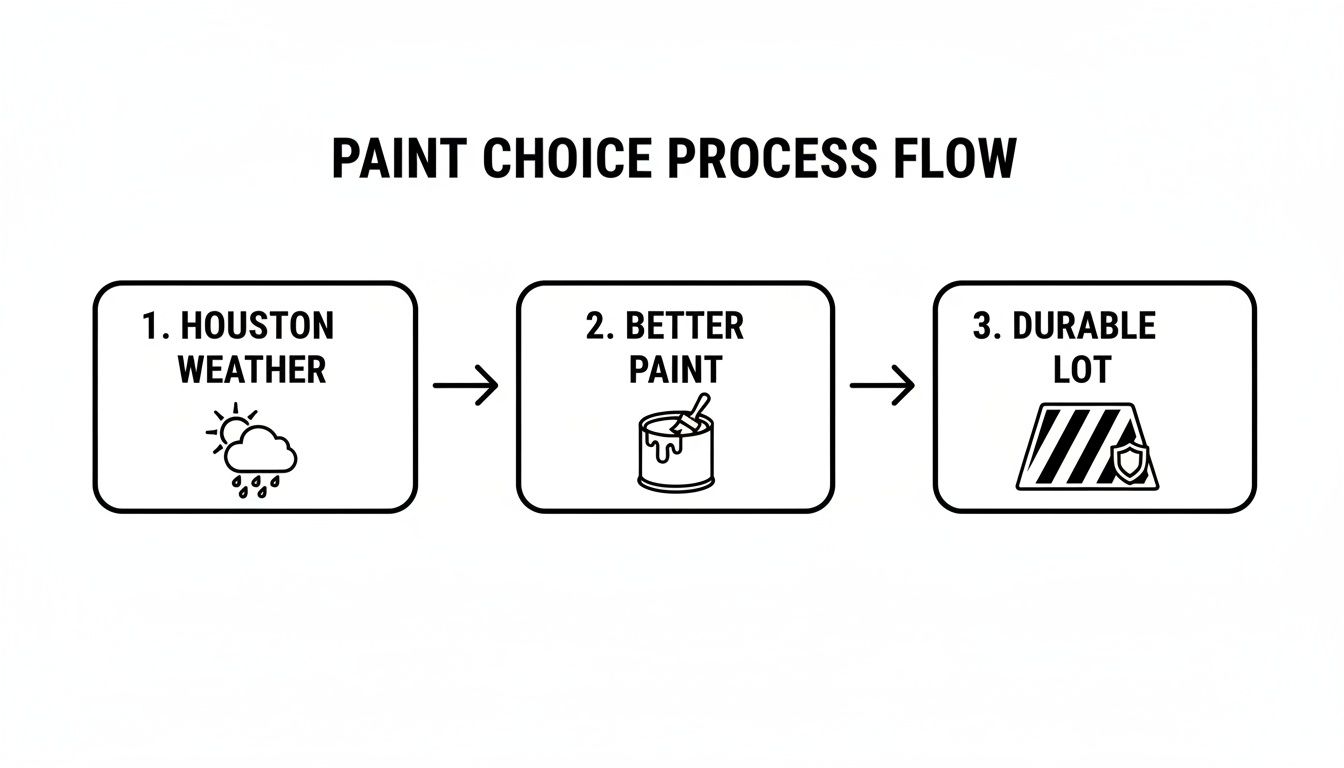
It’s a simple visual, but it highlights a critical decision: letting the local climate dictate material selection is the key to making the striping work last.
Step 3: Expert Application and Detail Work
With the layout perfectly marked, it's finally time to paint. Professionals use state-of-the-art airless line striping machines that apply a consistent, even coat of paint at high pressure. This is how we get those razor-sharp edges that are just impossible to replicate with rollers or spray cans.
Our crews work systematically, painting all the long, straight lines first before circling back for the detailed work. This is where we break out the heavy-duty stencils for things like:
- ADA handicap symbols
- Directional arrows
- "NO PARKING" or "FIRE LANE" text
- Numbered or reserved parking spaces
This final stage is what brings the whole project together, creating a clear, professional, and easy-to-navigate lot. With constant development, the need for these services is only growing. The global road marking machine market, which includes equipment for parking lot line striping, was valued at $8.08 billion and is projected to hit $13.83 billion by 2030. That growth is fueled by properties like yours needing to re-stripe every 1-2 years to maintain safety and curb appeal. You can learn more about the road marking equipment market growth on GrandViewResearch.com. From prep to the final stencil, this professional process is how you get results that last.
Decoding Striping Costs and Planning for Maintenance
Trying to nail down the cost of a professional parking lot line striping job can feel tricky, but it really comes down to a few key variables. There’s no flat rate because every project is unique. Think of it less like buying a product off the shelf and more like commissioning a custom piece of work. The final price tag will always depend on the size of your lot, the current condition of the asphalt, and how complex your layout needs to be.
Any good contractor will break down their quote for you, showing you exactly how these factors add up. That kind of transparency is important—it means you're not just getting a price, but you're also understanding the long-term value you're investing in.
Key Factors That Influence Your Quote
So, what actually goes into the final number? A few major things drive the cost of a striping project, mostly boiling down to the labor, materials, and time needed to get the job done right.
- Size and Scope of the Lot: This is the big one. A sprawling lot with hundreds of stalls is a much different job than a small retail lot with ten spots. More space means more paint, more prep, and more hours for the crew.
- New Layout vs. Re-Stripe: Just touching up old, faded lines? That's a re-stripe, and it's the most straightforward and budget-friendly option. But if we're working with fresh asphalt or creating a brand-new layout after a sealcoat, that’s a different story. It requires a lot more prep work—measuring, chalking, and careful planning—which adds to the complexity and cost.
- Condition of the Asphalt: A clean, smooth surface is the perfect canvas. But most lots aren't perfect. If yours has a lot of built-up dirt, stubborn oil stains, or cracks, we'll need to handle that first with power washing or crack sealing before a drop of paint goes down.
- Type of Materials: As we covered earlier, high-end materials like thermoplastic have a higher upfront cost than standard water-based acrylics. The right choice really depends on your budget and how much traffic the area gets.
Maintenance: An Investment, Not an Expense
It’s easy to see maintenance as just another line item on the budget, but that’s a huge mistake. Proactive parking lot line striping is one of the smartest things a property manager can do to protect their investment. It’s not just about spending money; it’s about preserving the value of your entire asphalt surface.
When lines get faded, cracked, and confusing, it does more than just make your property look tired. It can cause fender-benders, create parking chaos, and send a clear signal to customers that the place isn't being cared for.
Don't wait for your lines to disappear completely. A strategic re-stripe every 18-24 months is a proactive move that prevents small wear-and-tear from turning into major, thousand-dollar asphalt repairs down the road.
This simple, regular upkeep keeps your property looking sharp and professional. It's all about that first impression—showing customers, tenants, and visitors you’re committed to safety and order. If you want to get into the nitty-gritty of the numbers, you can dive deeper by reading our guide on understanding parking lot restriping costs.
At the end of the day, a well-maintained parking lot is simply better for business. It's safer, more efficient, and far more welcoming. By planning for routine re-striping, you get out of the expensive cycle of reactive repairs and into a proactive rhythm that protects your property for years to come.
How to Hire the Right Houston Striping Contractor

Choosing the right partner for your parking lot line striping project is hands-down the most critical decision you'll make. The quality of the work you get directly impacts your property's safety, compliance, and curb appeal for years. This isn't just about hiring a painter; it's about finding a strategic partner who gets Houston's specific challenges and regulations.
A great contractor is an investment. A bad one can leave you with peeling paint, a non-compliant lot, and the headache of having to pay someone else to fix it all. To avoid that, you need to know what to look for and, just as importantly, what to run from.
Your Contractor Vetting Checklist
Before you even think about signing a contract, make sure any potential contractor can tick every single one of these boxes. These are the absolute basics for any professional striping company in the Houston area.
Proof of Insurance: Don't just take their word for it. Ask to see a current certificate of general liability insurance. This is what protects you and your property if something goes wrong.
A Strong Local Portfolio: A good contractor is proud of their work and will be eager to show you. Ask for photos and addresses of recent projects nearby that are similar to yours. Go take a look for yourself.
Real Client References: Online reviews are one thing, but talking to a real person is another. Ask for references from other property managers or business owners they've worked with. Give them a call and ask about their experience.
Knowledge of Houston Codes: This is a big one. A real pro should be able to talk you through Houston's specific ADA, fire lane, and city parking rules. They should be a resource for compliance, not just someone who follows directions.
Red Flags to Watch Out For
Knowing what to avoid is half the battle. Some warning signs practically scream "amateur," and catching them early can save you from a project disaster.
An unusually low bid is often the most expensive one in the long run. It frequently signals that a contractor is cutting corners on crucial elements like surface preparation, material quality, or insurance coverage.
Keep your radar up for these common red flags:
Vague or Unwritten Quotes: A professional quote is detailed and itemized. It should break down the exact scope of work, the specific materials being used, and the total cost. No surprises.
Lack of Professional Equipment: Real striping companies use commercial-grade, airless line stripers to get those sharp, durable lines. If a crew shows up with paint rollers and a few cans from the local hardware store, that’s your cue to send them packing.
Pressure for a Huge Upfront Deposit: A small deposit to cover materials is normal. But if a contractor is demanding a large chunk of the total payment before a single drop of paint has been sprayed, it could be a sign of financial trouble on their end.
Your choice of contractor for parking lot line striping has a lasting impact. By using this checklist and keeping an eye out for red flags, you can confidently find a qualified, insured, and experienced partner. A little due diligence now ensures you get high-quality, compliant work that makes your property safer and more valuable.
Got Questions? We've Got Answers.
When it comes to parking lot line striping, we've heard just about every question in the book. Even with a solid plan, property managers usually have a few last-minute things they want to clear up. Here are some of the most common questions we get, with straightforward answers to help you feel confident about your project.
How Long Does This Actually Take?
The honest answer? It depends. The timeline for a striping project really comes down to the size of your lot and what exactly needs to be done. If you've got a small retail lot that just needs a simple re-stripe, we could be in and out in just a few hours with very little disruption.
On the other hand, if we're looking at a brand-new layout for a huge commercial property or a multi-level parking garage, that could easily be a full-day job, maybe even longer. Things like deep cleaning the surface, sealing up cracks, and applying custom stencils all add to the clock. Any professional crew worth their salt will give you a clear, realistic timeline upfront.
How Often Should I Be Re-Striping My Lot?
For most properties here in Houston, a good rule of thumb is to re-stripe every 18 to 24 months. That timeframe keeps your lines bright and visible, ensuring your property always looks sharp and well-maintained.
Now, if you're running a high-traffic spot—think a bustling shopping center or a busy industrial complex—you'll probably want to bump that up to once a year. The combination of heavy use, our intense Texas sun, and frequent downpours really does a number on paint, so staying on top of it is key for safety and compliance.
A lot of people wait until the lines are almost invisible, but that's a mistake that can cost you. Think of re-striping as a small, proactive expense. It helps you avoid bigger headaches, like liability issues from an accident in a poorly marked lot or the need for much more expensive asphalt work down the road.
What's the Best Time of Year for Striping?
Paint needs a dry surface and moderate temperatures to stick and cure properly. Here in Houston, that usually points to spring and fall as the sweet spots for getting this work done.
We need the pavement to be completely dry, which means we're looking for at least a 24-hour rain-free window before we start, plus a clear forecast for a while after. We can certainly work during the summer, but we'll often schedule those jobs for the early morning or evening to dodge the worst of the heat, which can mess with how the paint goes down.
Can You Work Around My Business Hours?
Of course. We know you can't just shut everything down for a day. A seasoned striping contractor is built to be flexible. We frequently schedule projects for nights, weekends, or whatever off-peak hours work best for you to keep disruptions to an absolute minimum.
Our main goal is to get the job done without getting in your way. We'll often work on one section of the lot at a time and use quick-drying paints to keep traffic flowing smoothly for your customers and tenants. It's all about good coordination.
Ready to make sure your property is safe, compliant, and looking its absolute best? The team at Houston Parking Lot Striping has the experience to manage your project the right way, from start to finish. Get your free, no-pressure quote today and see what a professional difference looks like.