How to Increase Property Value A Houston Commercial Real Estate Guide
If you're looking for the fastest way to increase your property's value, start outside. Strategic, high-impact exterior improvements deliver an immediate and visible return. Things like professional parking lot maintenance, smart landscaping, and modern lighting aren't just expenses—they're investments that attract better tenants, justify higher lease rates, and strengthen your property's position in the market.
The Undeniable Link Between Curb Appeal and Property Value
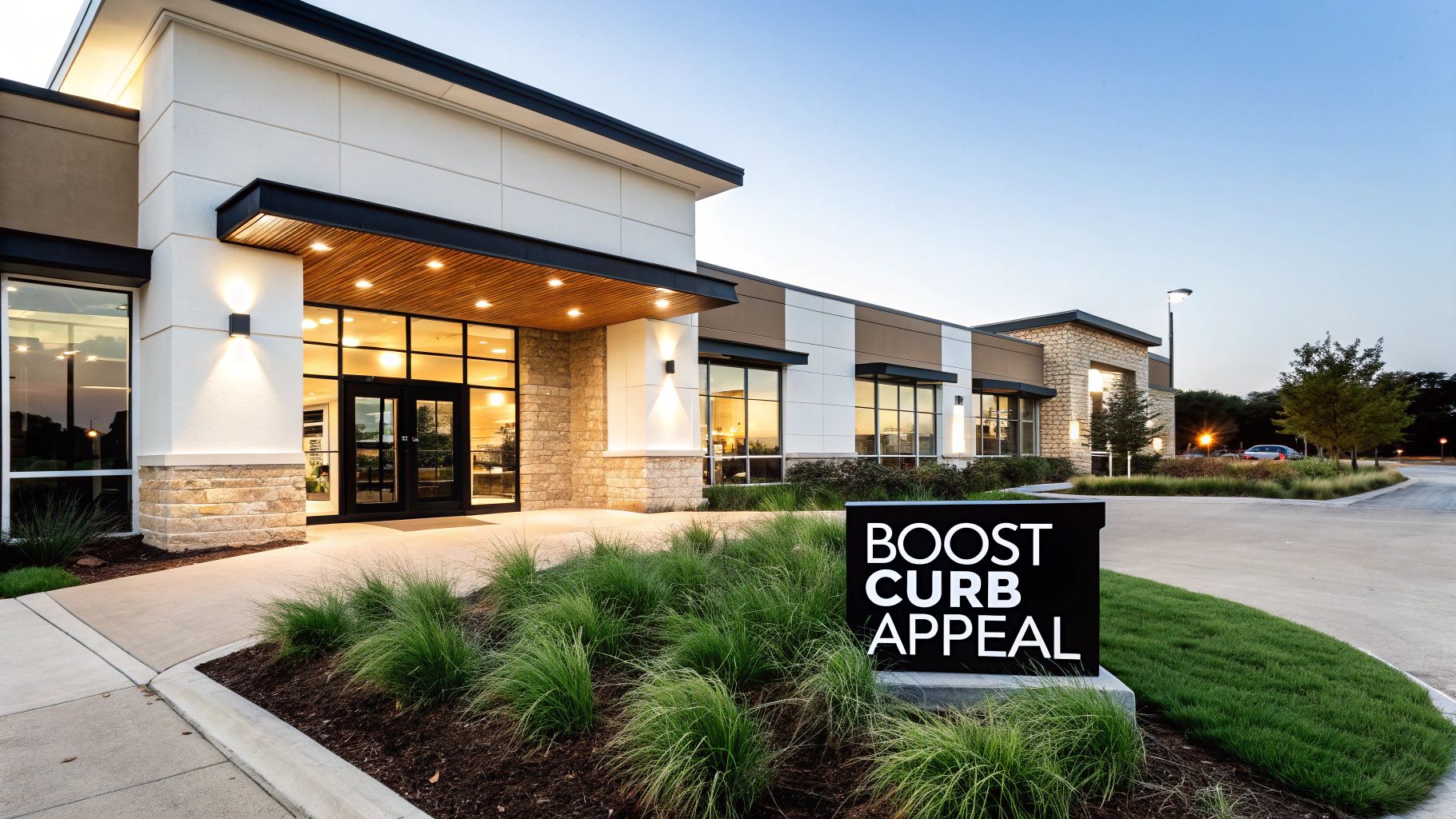
For any commercial property owner in the Houston area, the old saying holds true: you never get a second chance to make a first impression. Before a potential tenant, customer, or investor ever walks through your door, they’ve already formed an opinion based on what they see from the street.
That initial perception, formed in just a few seconds, directly shapes their view of your property's worth. This is the power of curb appeal. It’s more than just looking good; it's a clear signal of how well the asset is managed. A property with a clean, modern exterior communicates professionalism and success. On the other hand, a faded parking lot, messy landscaping, or poor lighting screams neglect, creating a negative bias that's tough to shake.
Why Exterior Upgrades Offer the Best Bang for Your Buck
Think of your property's exterior as its most important marketing tool. It’s on display 24/7, working to either attract or repel business. From my experience, strategic exterior upgrades consistently offer some of the highest returns on investment. Here’s why:
- Immediate Visual Impact: Unlike an interior renovation that only tenants see, exterior improvements are visible to everyone. A freshly striped lot or new landscaping makes an instant, powerful statement.
- Attracts Better Tenants and Customers: A welcoming, professional-looking property naturally draws more foot traffic and appeals to higher-quality tenants who are willing to pay more for a superior environment.
- Justifies Higher Lease Rates: When your property looks impeccably maintained, it’s much easier to justify premium rental rates. Tenants see the value in a location that reflects positively on their own brand.
- Enhances Safety and Security: Simple things like well-lit walkways, clear directional markings, and properly designated ADA parking create a safer environment, which reduces your liability and makes visitors feel more secure.
Start with the Foundation of Value: Your Parking Lot
Your parking lot is the heart of your curb appeal. It’s often the largest and most visible part of your property, and its condition sets the tone for everything else. A faded, cracked, or poorly marked lot can drag down the perception of the entire asset.
A neglected lot signals inattention and can cause the perceived value of your property to drop by 5-10%. Conversely, a freshly maintained and striped lot aligns with the global trend of 2.1% capital value growth seen in quality assets. It’s a surprisingly simple fix with a significant impact. You can get more details on global real estate trends in this PwC and Urban Land Institute report.
The condition of your parking area sets the tone for the entire customer and tenant experience. A clean, well-marked lot silently communicates that you care about safety, organization, and quality—values that directly translate to higher property worth.
To help you get started, we've compiled a quick-reference table summarizing the most effective improvements.
High-Impact Commercial Property Value Enhancements
This table breaks down some of the most effective strategies, highlighting where to focus your efforts for the best results.
| Improvement Area | Primary Impact | Potential ROI |
|---|---|---|
| Parking Lot Striping & Repair | Safety, Compliance, First Impressions | High |
| Landscaping & Green Spaces | Aesthetic Appeal, Tenant/Customer Experience | High |
| Exterior Lighting Upgrades | Security, Safety, Modern Appearance | Medium-High |
| Facade & Signage Updates | Brand Image, Modernization, Visibility | Medium-High |
| Energy-Efficient Windows/Doors | Operational Cost Savings, Sustainability | Medium |
Focusing on these areas first will give you the most visible and financially rewarding improvements.
This guide will walk you through actionable strategies—from parking lot striping and ADA compliance to smart landscaping—that work together to boost your property’s value. And if you're looking for ways to protect your asphalt from the brutal Houston sun, our guide on how to properly seal coat your asphalt is a great place to start. These aren't just maintenance chores; they are strategic investments in your property's long-term financial success.
Mastering First Impressions with Your Parking Lot
Your parking lot is the official welcome mat for your commercial property. It's the very first physical interaction anyone has with your business, yet it’s often the most neglected asset when property owners think about boosting their property's value.
This space is far more than just a place for cars; it's a powerful marketing tool that sets expectations. Faded lines, cracked asphalt, and a confusing layout project an image of disorganization and neglect. On the other hand, a well-maintained lot with crisp, bright markings creates an immediate sense of safety, professionalism, and order that tenants, customers, and investors absolutely notice.
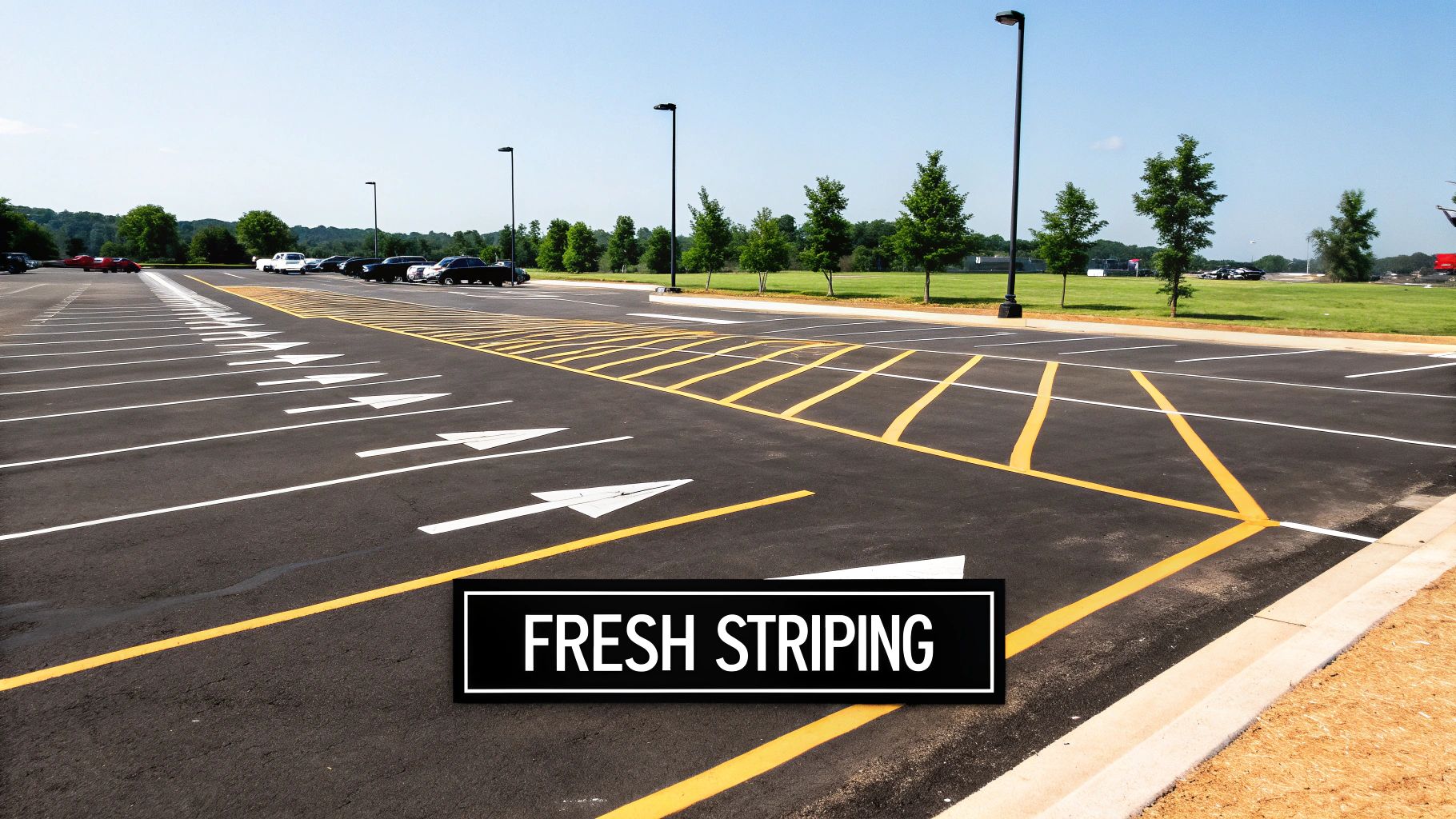
This transformation isn’t just cosmetic—it's about creating a functional, safe, and welcoming environment that directly impacts your bottom line.
From Utility to Value Driver
Think about the subconscious message your parking lot sends right now. Does it say, "We care about details and your safety," or does it scream, "We cut corners"? The difference is stark, and it has a real financial impact.
A clean, clearly marked lot doesn't just look better; it functions better. Efficient traffic flow, clearly designated spaces, and visible pedestrian walkways reduce frustration and minimize the risk of accidents. This is the kind of attention to detail high-value tenants look for when scouting a new location.
A parking lot isn’t just asphalt and paint; it’s a direct reflection of your management standards. A well-executed re-striping project is one of the most cost-effective ways to instantly elevate the perception of your entire property.
Investing in your parking area is a clear signal of proactive management, a quality that is highly attractive to potential buyers and appraisers alike.
A Houston Retail Center Turnaround Story
Let's look at a real-world scenario from a mid-sized retail center just outside Houston. The property manager was facing declining foot traffic and struggling to attract new tenants. She decided to tackle the property's tired appearance head-on, but instead of starting with costly facade renovations, she focused on the most visible problem: the chaotic and faded parking lot.
The original layout was inefficient, and years of sun and rain had rendered the lines nearly invisible. The manager hired a professional crew to not only re-stripe the lot but to first redesign the layout entirely. That one change added 15 extra parking spaces and created a much smoother traffic flow.
The results were almost immediate. Within three months of completing the project—which included fresh sealcoating and vibrant new lines—the center saw a noticeable uptick in customer visits. Better yet, two new high-quality tenants signed leases, specifically citing the property's improved, professional appearance as a key factor in their decision. The investment in the parking lot paid for itself in less than a year.
Actionable Steps for a High-Value Parking Lot
Revitalizing your parking area is a straightforward process when you break it down into a few key actions. Each step here contributes to creating a safer, more organized, and far more appealing property.
- Sealcoating for Protection and Appearance: Before any lines are painted, applying a quality sealcoat is essential, especially in the harsh Texas climate. It protects the asphalt from UV damage and water penetration, extending its life and providing a rich, black canvas that makes new stripes pop.
- Strategic Re-Striping for Clarity: Fresh, bright lines guide drivers safely and efficiently. Insist on high-quality, durable traffic paint for stall lines, directional arrows, and stop bars to ensure they remain visible for as long as possible.
- Clear Markings and Stencils: Go beyond basic lines. Use professional stencils for reserved parking (like "Visitor" or "Employee of the Month"), no-parking zones, and loading areas. This level of organization eliminates confusion and enhances the professional feel of your lot. You can see how a thoughtful approach to space allocation can transform your property in our detailed guide on parking lot layout design.
By focusing on these elements, you turn your parking lot from a simple utility into a strategic asset. It's a foundational step that delivers a powerful first impression that resonates long after a visitor has parked their car.
Navigating Compliance to Boost Value and Avoid Penalties
Fresh paint and a newly sealed lot look great, but let's talk about something with far more financial weight: legal compliance. This isn't just about checking boxes; it’s about actively protecting your investment and preventing major headaches down the road. For Houston-area properties, non-compliance is a direct threat to your bottom line.
Think of it this way: ensuring your parking lot meets all Americans with Disabilities Act (ADA) and local fire lane codes is one of the smartest, highest-ROI moves you can make. A compliant property is simply worth more. It's safer, more marketable, and insulated from the kind of six-figure fines and lawsuits that can instantly crater your property's value. It’s a critical layer of asset protection that pays for itself during an appraisal, a sale, or even just a routine fire marshal inspection.
The High Cost of an ADA Violation
The ADA is a federal civil rights law, and violations are not taken lightly. For commercial properties, this scrutiny often begins right in the parking lot. Failing to provide properly marked and configured accessible parking isn't a minor slip-up—it's a massive liability.
First, you have the federal fines, which can easily climb into the tens of thousands of dollars for a first offense. Then you have the risk of lawsuits from individuals who couldn't access your property. These legal battles are a drain on time and money, and they can seriously tarnish your building's reputation with potential tenants and buyers.
A property with known compliance issues is a huge red flag for any serious investor. They'll either walk away or demand a steep price cut to cover the cost and risk of fixing the problem, which comes directly out of your pocket.
Texas ADA Parking Requirements in a Nutshell
Getting ADA compliance right involves very specific details. It's not as simple as painting a few blue rectangles. While I always recommend a professional assessment, here are the absolute must-haves for your Houston property:
- The Right Count: The total number of accessible spots you need is dictated by the total number of spaces in your lot.
- Correct Sizing: Standard accessible stalls have to be at least 96 inches (8 feet) wide.
- Van-Accessible Stalls: For every six accessible spaces, at least one must be van-accessible, which means it needs a much wider access aisle—at least 96 inches.
- Clear Access Aisles: These striped areas next to the stalls are strict "no parking" zones. They’re essential for wheelchair ramps and lifts.
- Proper Signage: Every accessible space must have the International Symbol of Accessibility. Van spaces need additional signage explicitly stating "Van Accessible."
An inch here or there really does matter. A space that’s slightly too narrow or has the wrong sign is still a violation. To get into the weeds on this, you can learn more about Texas ADA handicap parking space requirements in our detailed guide.
Don't Forget Fire Lane Compliance
Just as crucial as ADA regulations are the local fire lane codes, enforced by the Houston Fire Marshal. Their entire purpose is to guarantee that fire trucks and other emergency vehicles can get to your building without a single obstruction.
Properly marked fire lanes are non-negotiable. It's often the first thing an inspector checks. If your markings are faded, painted incorrectly, or missing altogether, you can expect immediate fines and a notice to comply. That often means shutting down parts of your lot until the striping is fixed, which can disrupt your tenants' business.
From a property value standpoint, a clean record of fire marshal inspections demonstrates responsible management. It's a powerful signal to a potential buyer that your property is a well-maintained, low-risk asset, making it much easier to justify your asking price.
The ROI of Smart Maintenance and Strategic Upgrades
It's easy to get excited about big-ticket projects like a full parking lot overhaul—they deliver that immediate "wow" factor. But I've been in this business long enough to know the real secret to long-term value creation is much less dramatic: it's all about consistent, intelligent upkeep.
Smart property owners think beyond one-time fixes. They embrace a proactive maintenance mindset, which is the key difference between funding costly emergency repairs and making small, strategic investments that prevent those crises from ever happening. This isn't just about keeping things from falling apart; it's about systematically enhancing your asset. Every dollar spent this way strengthens your bottom line, keeps your tenants happy, and boosts your appraisal value when it's time to sell or refinance.
Proactive Maintenance is Your Best Defense
Here in the Houston area, the climate is relentless. Your property is constantly battling intense sun, heavy rain, and stifling humidity. A "fix it when it breaks" approach is a surefire way to watch your profits get eaten up by expensive, rushed repairs. Being proactive flips that script, turning small, predictable costs into major long-term savings.
Take your parking lot's asphalt, for example. Ignoring small cracks seems minor at first, but then water gets in, the temperature fluctuates, and suddenly you have a massive pothole that can't be ignored. A simple, regular sealcoating application is your best defense. It shields the asphalt from the brutal Texas sun and water damage, which can dramatically extend its life and save you from a complete—and very expensive—repaving job down the road.
This flowchart lays out the clear financial choice between getting ahead of issues and waiting for them to become problems.
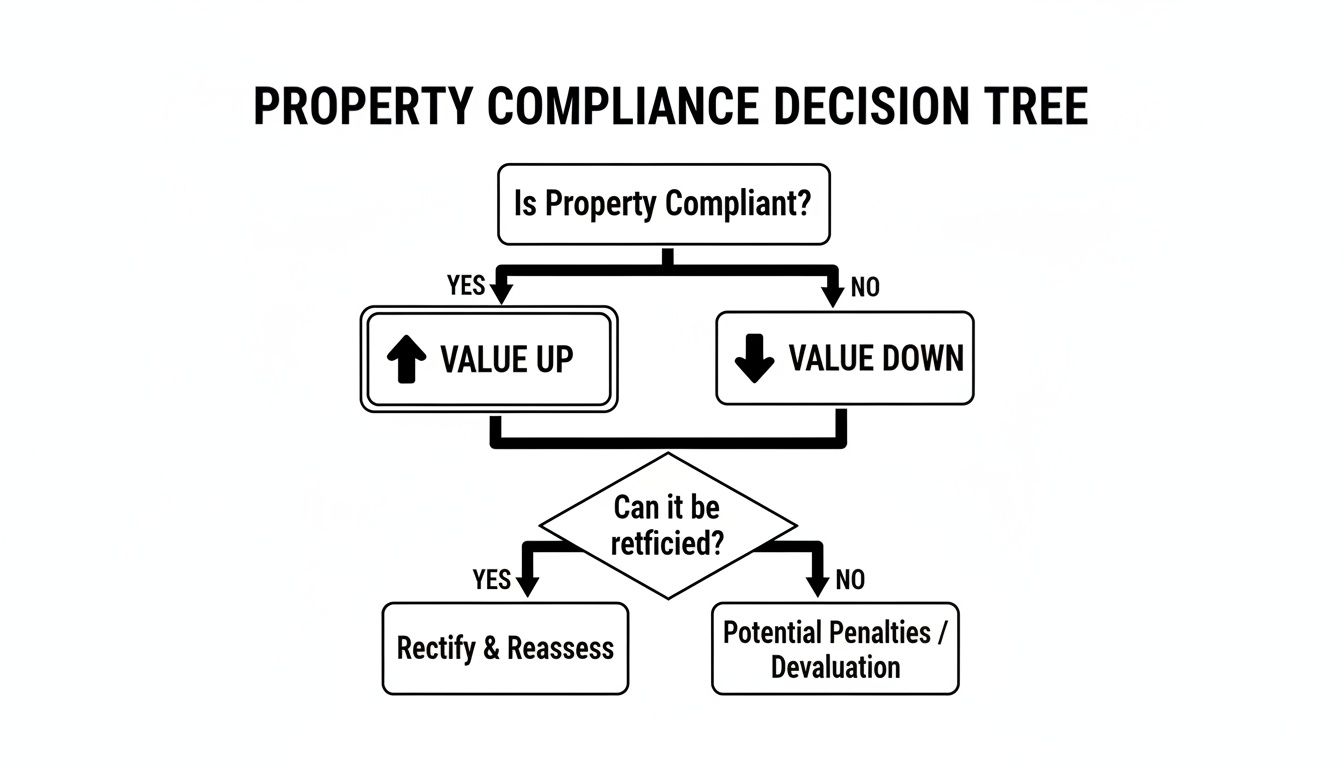
As you can see, the path of compliance and proactive care leads directly to increased property value. The alternative? Devaluation and costly penalties. It's a pretty clear-cut decision.
Other simple maintenance tasks offer a surprisingly high return, too:
- Regular Power Washing: Don't underestimate the power of clean. Getting rid of accumulated grime, oil stains, and mildew makes walkways and storefronts look newer and far more inviting.
- Proactive Line Removal: A common mistake I see is just painting over old, flaking lines. It looks messy and cheapens the whole investment you just made in re-striping. Taking the time to properly remove the old markings first results in a clean, professional finish that lasts.
Strategic Upgrades That Tenants and Appraisers Love
Once you have a solid maintenance routine, you can focus on strategic upgrades that deliver an exceptional return by improving tenant experience and operational efficiency. These are the improvements that directly answer the question of how to increase property value because they make your building more desirable and profitable.
A well-maintained property doesn't just look better—it performs better. Upgrades that improve safety, reduce operational costs, and enhance the daily experience for tenants are what separate an average asset from a premium one.
The numbers don't lie. A fresh, well-maintained parking lot signals proactive management, which can help lift rental yields by 4-7%. On the flip side, a neglected lot can turn away customers, potentially dropping foot traffic by 10-15% and hurting your tenants' businesses—and ultimately, your property's value. These local trends often mirror broader market dynamics, as seen in these insights on property price stabilization.
Prioritizing Your Investments for Maximum Impact
Not all upgrades are created equal, and every budget has its limits. The key is to focus on the improvements that deliver the most visible and functional benefits first, whether you're managing a retail center, an office building, or an industrial park.
Here’s a practical way I advise clients to prioritize projects:
- Safety and Security First: This is non-negotiable. Upgrading your parking lot lighting to energy-efficient LEDs is a fantastic investment. It instantly enhances security, makes visitors feel safer, and significantly lowers your utility bills—a direct boost to your Net Operating Income (NOI). Adding security cameras is another high-value move that pays for itself in peace of mind.
- Enhance Common Areas: If you have a retail or office property, modernizing lobbies, hallways, and restrooms can make a huge difference in tenant satisfaction. Think fresh paint, updated fixtures, and maybe some comfortable seating. It's all about creating a more premium, welcoming feel.
- Invest in Smart Landscaping: You can have great curb appeal without the high water bills. Swap out fussy, high-maintenance plants for native Texas species that are built for our climate. They’re drought-tolerant, look great, and cut down on landscaping and water costs.
By blending a rigorous maintenance schedule with smart, high-ROI upgrades like these, you create a property that isn't just more valuable on paper. You build a more attractive, profitable, and resilient asset that can truly compete in the Houston market.
Documenting Improvements to Solidify Your Property's Worth
So you’ve invested time and capital into smart upgrades—maybe you just finished a full parking lot re-striping or installed a new energy-efficient lighting system. That's great, but many property owners stop there, missing a final, critical step: meticulously documenting the work. It’s an oversight that can genuinely cost you when it’s time to sell, refinance, or even justify a rent increase.
Think of your documentation as the official storybook of your property's value. Without it, you're just relying on memory and what an appraiser thinks they see. With it, you have a powerful, organized file of tangible proof that justifies every dollar of value you’ve added. This is how you transform your improvements from simple expenses into documented, value-adding capital investments.
This isn't just about shoving a few receipts into a manila folder. It's about creating a comprehensive financial history that proves your proactive management and substantiates a higher valuation. It’s the final piece of the puzzle to actually capturing the return on your investment.
Creating Your Property's Value Portfolio
The goal here is to build a "value portfolio" for your property. This can be a physical binder or a digital one, but its purpose is to tell a clear, compelling story of continuous improvement. When an appraiser or a potential buyer asks why your property is worth more today than it was last year, you won't just tell them; you'll show them.
This portfolio becomes an indispensable tool in a few key scenarios. During a sale negotiation, it gives you concrete evidence to back up your asking price. When you're applying for refinancing, it gives lenders confidence in the quality of the asset and your management skills. I’ve even seen it used as a powerful tool for tenant relations when explaining rent adjustments that are tied to specific property enhancements.
What Every Property Owner Must Document
Getting your documentation organized is pretty straightforward once you know what to keep. The system doesn't need to be complicated, but it absolutely must be consistent. For every single improvement or major maintenance project, your file should contain a few key items.
- Detailed Invoices: Always get records that clearly itemize labor and materials. An invoice that just says "Parking Lot Work" for $10,000 is weak. One that details "Sealcoating of 20,000 sq ft, re-striping of 100 stalls, and installation of 4 ADA-compliant signs" is infinitely more powerful.
- Proof of Payment: Canceled checks, credit card statements, or bank transfers serve as undeniable proof that the work was actually completed and paid for.
- Before-and-After Photos: This is probably the most potent tool in your arsenal. A visual comparison showing a faded, cracked lot next to a crisp photo of the same lot with fresh sealcoating and bright lines tells a story that numbers alone never can.
- Warranties and Manuals: For big-ticket items like a new HVAC system, roofing, or LED lighting, always file away the manufacturer warranties and operating manuals. These are valuable assets that transfer to a new owner and show you’ve invested in quality.
- Compliance Certificates: Did you bring your lot up to current ADA standards? Keep the contractor's statement or any inspection reports confirming compliance. The same goes for fire lane certifications you might get from the local fire marshal.
Meticulous records are your best defense against an undervalued appraisal. An appraiser can't argue with a detailed, chronological file of receipts, photos, and compliance certificates that prove your investment and diligence.
This organized approach directly addresses how to increase property value by building a paper trail that makes the worth of your physical improvements undeniable.
From Digital Folders to Physical Binders
How you organize this information is really a matter of personal preference, but consistency is king. A simple cloud-based system using a service like Google Drive or Dropbox with folders for each calendar year is a fantastic start. Inside each year, you can create subfolders for each project (e.g., "2024 – Parking Lot Sealcoating," "2024 – Lobby LED Upgrade").
If you're more of an old-school, physical-copy person, a dedicated three-ring binder with dividers works just as well.
The important thing is to have a centralized, easy-to-access location for all of it. This simple habit of filing documentation immediately after a project is finished will pay for itself many times over. It’s what separates savvy investors from average property owners and ensures you capture every last bit of value you work so hard to create.
Answering Your Top Questions About Boosting Property Value
As a Houston-area property owner, you're always looking for smart, practical ways to get the most out of your investment. We’ve walked through some of the heavy hitters, from curb appeal to compliance, but now let's dig into the questions I hear most often from fellow owners.
These are the real-world concerns that come up time and again when it's time to put a plan into action.
How Often Should I Really Re-Stripe My Houston Parking Lot?
In my experience, the sweet spot for most commercial lots around Houston is every 18 to 24 months. That timeline isn't a guess—it's based on what our unique climate throws at our properties.
Between the relentless Texas sun, our famous downpours, and the constant flow of traffic, even the best traffic paint takes a beating. Once those lines start to fade and chip, it’s not just an eyesore. It becomes a genuine safety issue that can cause confusion for drivers and increase your liability.
Think of it this way: a freshly striped lot is one of the clearest signs of proactive, professional management. It’s a relatively small, recurring expense that pays huge dividends in perception and protects your asset's value, both for tenants and during a formal appraisal. Pro tip: if you’ve just had the lot sealcoated, striping on top of that fresh black surface gives you maximum pop and extends the life of the paint.
What’s the Single Most Cost-Effective Curb Appeal Upgrade?
Hands down, it's your parking lot. No other single project delivers such a high and immediate visual return. Your lot is the first thing everyone sees—customers, tenants, appraisers, you name it.
A full refresh can make a property look ten years younger practically overnight. It’s a simple, but powerful, three-part punch:
- Power wash to blast away all the accumulated grime and oil stains.
- Apply a fresh sealcoat to give it that deep, uniform blacktop look and protect the asphalt.
- Finish with sharp, bright line striping that makes the whole space look organized and professional.
When you compare this to the cost of major architectural changes or a complete landscaping overhaul, a parking lot makeover is a no-brainer. It's the fastest, most affordable way to make a significant, tangible impact on your property's value.
A Houston-area property might see a $35,736 value increase from adding a pool. While that's great for some properties, a complete parking lot restoration often costs far less while impacting every single person who visits, delivering a much broader boost to your curb appeal and perceived value.
Is ADA and Fire Lane Compliance Really a Big Deal for Property Value?
Absolutely. It’s not just important; it’s fundamental. A property that isn't up to code with the Americans with Disabilities Act (ADA) or local fire regulations has a built-in financial liability.
Any savvy buyer will immediately calculate the cost of getting the property compliant and subtract it from their offer—you lose value before negotiations even begin. Appraisers will also flag these issues, which can create major headaches if you're trying to refinance.
But it goes beyond the numbers. Proper ADA access and clearly marked fire lanes make your property safer and more welcoming for everyone. That translates directly to attracting and keeping good tenants. Investing in professional, compliant markings isn't an expense; it's a direct investment in your property's marketability, legal standing, and bottom-line worth.
Can New Lighting Actually Change My Property's Value?
Yes, and in more ways than you might think. Upgrading your exterior lighting, especially to modern LEDs in parking areas and along walkways, is one of the smartest high-ROI moves you can make.
First, it’s a huge boost for safety and security. A well-lit property makes tenants and their customers feel safer at night, which can lower your liability risk and make your space more attractive to businesses with evening hours.
Second, the aesthetic improvement is dramatic. The crisp, clean light from LEDs gives a property a modern, high-end feel that old, yellowing fixtures just can't match.
Finally, and this is key for valuation, LEDs slash your energy and maintenance bills. This directly improves your property's net operating income (NOI), which is a core metric in any commercial appraisal. A higher NOI means a higher property value. It's a clear win-win.
Ready to make the single most impactful improvement to your commercial property? The team at Houston Parking Lot Striping has over 15 years of experience delivering precise, compliant, and durable pavement marking solutions that elevate property value. From ADA compliance to a full lot re-stripe, we get the job done right, on time, and on budget. Get your free, no-obligation estimate today by visiting us at https://houstonparkinglotstriping.com.